IAEA urges strict verification of Iran’s nuclear program as US-Iran ceasefire talks continue amid disputes over inspections and sanctions.
IAEA Calls for Strong Verification of Iran Nuclear Program Amid Ongoing Ceasefire Talks
The International Atomic Energy Agency (IAEA) has renewed its call for a comprehensive verification system to monitor Iran’s nuclear program, emphasizing that international inspections remain essential to ensuring the country’s nuclear activities remain peaceful. The appeal comes as negotiations between the United States and Iran continue, with both sides offering conflicting statements about the progress of a long-term ceasefire agreement.
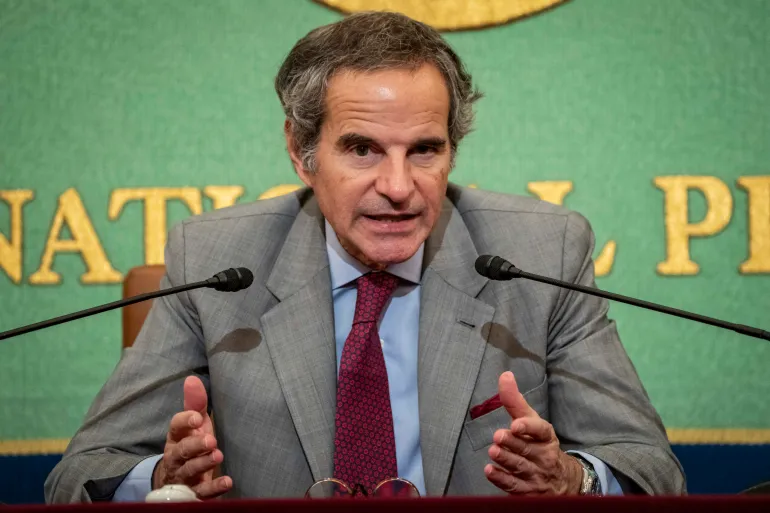
IAEA Director General Rafael Grossi stressed that declarations alone are not enough to reassure the international community about Iran’s nuclear intentions. While Iran has repeatedly stated that its nuclear program is designed exclusively for peaceful and civilian purposes, Grossi said the agency’s responsibility is to independently verify those claims through transparent inspections.
According to Grossi, the IAEA does not assess political intentions but instead relies on scientific verification and direct access to nuclear facilities. He emphasized that an effective verification system must be established as quickly as possible to provide confidence that Iran is not developing nuclear weapons.
The issue has become one of the most important elements of ongoing diplomatic discussions between Washington and Tehran. The preliminary ceasefire framework reached earlier this month includes provisions related to Iran’s nuclear program, with the IAEA expected to oversee the technical verification process. However, disagreements remain over the scope and timing of inspections.
Iran temporarily suspended cooperation with the IAEA following military strikes on several of its nuclear facilities during last year’s regional conflict involving the United States and Israel. Although Tehran later agreed to allow inspectors to return to some nuclear sites, access to facilities damaged during the attacks has not yet been granted. In addition, questions remain regarding the current location and status of Iran’s enriched uranium stockpile.
These unresolved issues continue to raise concerns among international observers. The IAEA maintains that complete access to all relevant nuclear sites is necessary to verify the peaceful nature of Iran’s nuclear activities and ensure compliance with future agreements.
Negotiations between the United States and Iran have also been complicated by contradictory public statements. US officials have claimed that Iran has already accepted extensive nuclear inspections as part of the ceasefire understanding. Iranian officials, however, insist that discussions regarding inspections are still ongoing and will only be finalized as part of a broader agreement.
Iranian Deputy Foreign Minister Kazem Gharibabadi recently stated that access to sensitive nuclear facilities and materials would be addressed during negotiations leading to a final agreement. He also argued that expanded cooperation with international inspectors depends on meaningful progress toward lifting US sanctions imposed on Iran.
The United States has rejected the suggestion that sanctions relief is a prerequisite for nuclear inspections. American officials maintain that strict verification measures are already included in the existing framework and should be implemented without delay.
Grossi acknowledged the growing gap between public statements made by both governments, describing the situation as a “war of statements.” Despite the political disagreements, he expressed confidence that the technical aspects of nuclear verification can still move forward. He noted that the memorandum reached by both countries specifically assigns the IAEA responsibility for supervising the nuclear components of the agreement.
The IAEA chief explained that while immediate access is desirable, a short delay of one or two weeks would not necessarily undermine the overall verification process. He emphasized that the ceasefire framework contains multiple political and technical elements, with nuclear monitoring representing only one part of a broader diplomatic effort.
Meanwhile, Iran’s Foreign Ministry has once again rejected allegations that its nuclear program is intended for military purposes. Iranian officials insist that the country’s nuclear activities remain entirely peaceful and argue that accusations from Western governments are politically motivated.
Iran has also called for greater regional cooperation to establish a nuclear-weapons-free zone across West Asia. Officials believe such an initiative would improve regional security while demonstrating Iran’s commitment to peaceful nuclear technology.
The future of the negotiations will largely depend on whether both sides can resolve disagreements over inspections, sanctions, and transparency. For the international community, independent verification remains the cornerstone of any lasting nuclear agreement.
As diplomatic talks continue, the IAEA is expected to play a central role in monitoring compliance and rebuilding international confidence. Whether the agency receives unrestricted access to Iran’s nuclear facilities will likely determine the success of future agreements aimed at reducing tensions and preventing nuclear proliferation in the region.