India protests over exam leaks intensify as demands grow to remove the education minister, highlighting Modi’s long-standing leadership approach.
India Protest Over Exam Leaks Highlights Modi’s Leadership Approach
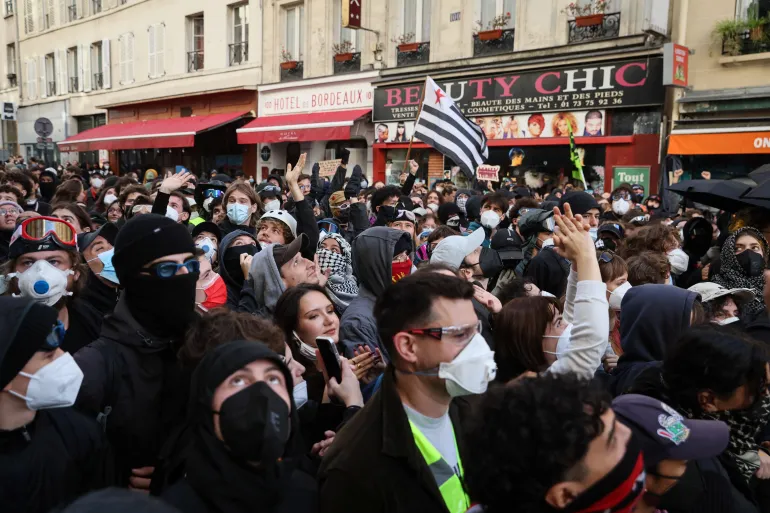
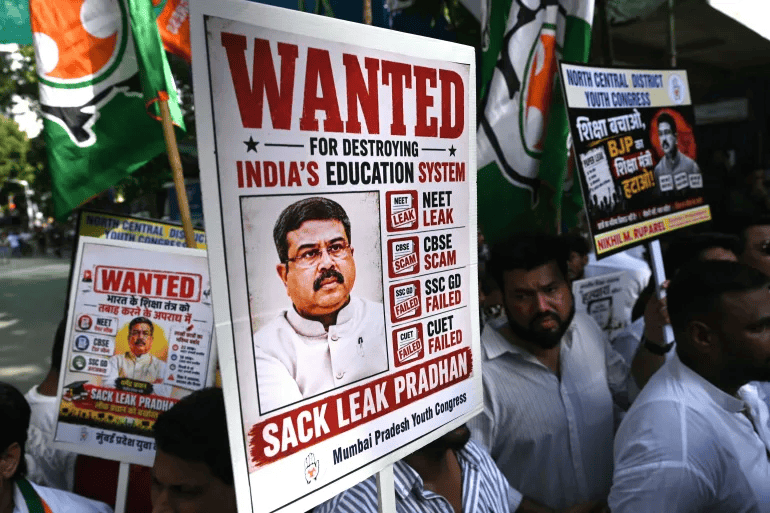
Thousands of young protesters have gathered in New Delhi to demand the resignation of India’s Education Minister, Dharmendra Pradhan, following repeated examination paper leak controversies. The demonstrations, led largely by students and young job seekers, have become one of the most significant public challenges faced by Prime Minister Narendra Modi during his third term in office.
The protests reflect growing frustration among students who believe repeated exam leaks have damaged the credibility of India’s competitive examination system. Many participants argue that millions of students spend years preparing for these highly competitive tests, only to see their efforts undermined by allegations of corruption, poor security, and repeated question paper leaks.
Opposition political parties have joined the demonstrations, supporting calls for greater accountability and demanding that the education minister step down. Despite increasing public pressure, the government has shown no indication that it intends to remove Pradhan from his position.
This response has not surprised many political observers. Throughout Narendra Modi’s years in office, his government has consistently resisted demands for ministers to resign during major controversies. Rather than making immediate leadership changes, Modi has generally chosen to stand by members of his cabinet unless broader political circumstances require restructuring.
Political analysts note that this approach has become one of the defining characteristics of Modi’s leadership style. Supporters argue that ministers should not be removed solely because of political pressure or public protests, while critics believe refusing to accept ministerial responsibility weakens democratic accountability.
The current controversy over examination leaks is only the latest example in a series of incidents where ministers remained in office despite widespread criticism.
One of the earliest major controversies occurred in 2015 after the lynching of Mohammad Akhlaq, a Muslim resident of Uttar Pradesh, who was attacked by a mob following allegations related to cow slaughter. The incident triggered nationwide outrage and renewed debate over communal violence in India.
At the time, then Culture and Tourism Minister Mahesh Sharma faced criticism after describing the killing as an accident. His comments prompted opposition parties and several civil society groups to demand his resignation. However, Sharma continued serving in the government and remained an important political figure for several years before eventually leaving the cabinet during a later reshuffle.
Another major political controversy emerged in 2016 following the death of Rohith Vemula, a doctoral student at the University of Hyderabad. Vemula, who belonged to the Dalit community, had been suspended along with several other students after disputes involving student organizations.
His death sparked nationwide student protests and renewed conversations about caste discrimination, higher education policies, and the treatment of marginalized communities. Then ministers Smriti Irani and Bandaru Dattatreya came under intense public criticism over their alleged roles in events leading up to the tragedy.
Opposition leaders demanded that both ministers resign. However, neither immediately stepped down. Instead, both continued serving in different government positions, reinforcing the perception that Modi rarely responds to public pressure by removing cabinet members.
A similar pattern appeared again in 2021 following the Lakhimpur Kheri incident in Uttar Pradesh. During protests against controversial agricultural reforms, several people lost their lives after a vehicle allegedly struck protesting farmers. Ashish Mishra, son of junior Home Minister Ajay Mishra Teni, faced serious criminal allegations connected to the case.
The incident generated nationwide outrage and led to repeated calls for Ajay Mishra Teni to resign from the government. Nevertheless, he remained in office until after the 2024 general election, when he lost his parliamentary seat.
One notable exception occurred during the COVID-19 pandemic. As India struggled through a devastating second wave of coronavirus infections in 2021, criticism of the government’s pandemic response intensified. Health Minister Harsh Vardhan eventually resigned during a cabinet reshuffle, becoming one of the few ministers to leave office amid widespread public dissatisfaction.
Critics often compare Modi’s record with previous governments, where ministers overseeing important departments sometimes resigned or were removed following major controversies. They argue that ministerial accountability strengthens democratic institutions and helps restore public confidence during crises.
Supporters of the current government disagree, arguing that opposition parties frequently use controversies for political advantage and that cabinet decisions should not be driven by street protests alone. They believe stability within the government allows long-term policy implementation without constant political disruption.
Meanwhile, the ongoing student demonstrations continue to highlight broader concerns about India’s education system. Protesters are demanding stronger examination security, transparent investigations into paper leaks, tougher punishment for those responsible, and reforms that restore trust in competitive recruitment exams.
As public pressure continues to build, the government’s handling of the controversy will likely remain a major issue in Indian politics. Whether or not leadership changes occur, the protests have already sparked an important national conversation about educational integrity, government accountability, and the expectations of millions of young Indians preparing for competitive examinations.