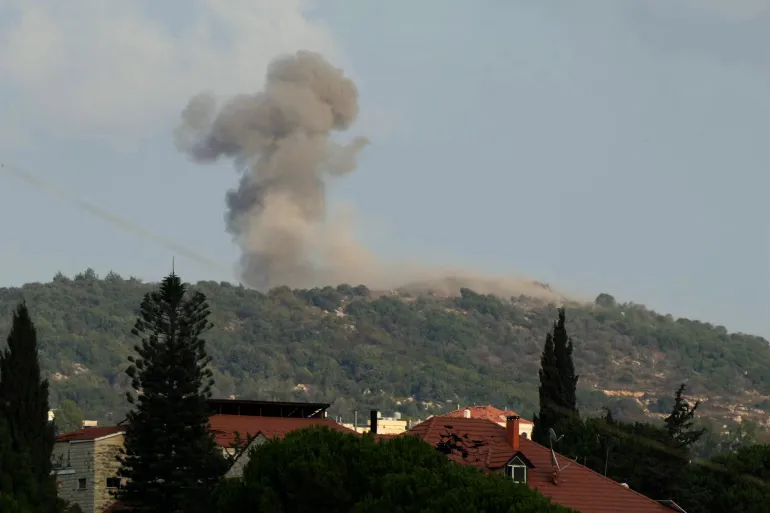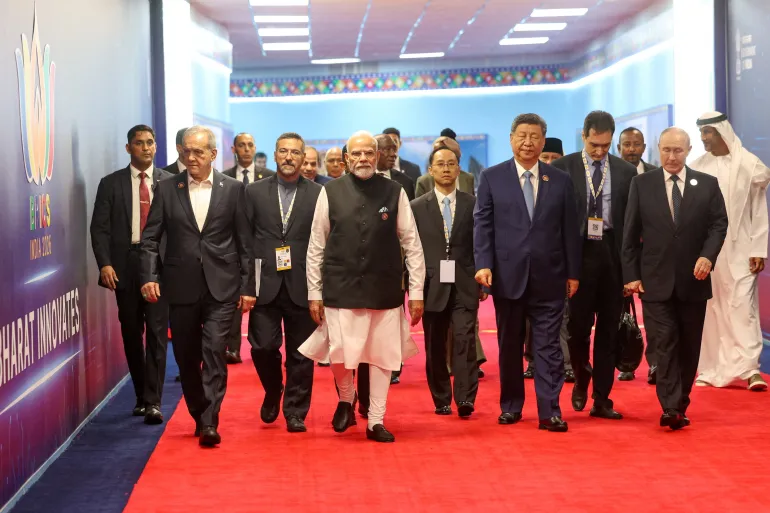
The Iran war highlights BRICS limits as members struggle to unite on geopolitics while pushing for a more multipolar global order.
The Iran War Reveals the Limits of BRICS
The Iran war has exposed a major challenge facing BRICS: the group has growing economic and diplomatic influence, but turning that influence into coordinated geopolitical action remains difficult.
BRICS has expanded its membership and strengthened its position as a voice for emerging economies. Its members frequently call for a more balanced international system, greater representation for developing countries, and less dependence on Western-led financial institutions. Yet the conflict involving Iran, the United States and Israel has shown how difficult it is for the group to reach a unified position on major international crises.
The Iran War Becomes a Test for BRICS
The conflict has affected many BRICS members and partner countries, particularly through concerns over regional security, energy supplies and global trade. However, the group has struggled to produce a strong and unified response.
Earlier discussions among BRICS foreign ministers also revealed significant disagreements over how the conflict should be addressed. Iran wanted stronger criticism of the US and Israel, while other members were concerned about regional security and Iran’s military actions.
The disagreement highlights one of BRICS’ biggest challenges. Its growing membership gives it greater global reach, but it also brings together countries with competing regional interests.
Iran and the United Arab Emirates provide a clear example. Both are part of the wider BRICS framework, yet they have different security priorities in the Middle East. Reaching a common position on a conflict involving Iran therefore becomes extremely complicated.
Instead of acting like a traditional geopolitical alliance, BRICS is increasingly becoming a platform where countries with different interests attempt to manage their disagreements.
Why BRICS Cannot Easily Challenge the US
BRICS is often viewed as a potential counterweight to US global influence. However, its members do not share the same strategy toward Washington.
India demonstrates this challenge particularly well. New Delhi supports strategic autonomy and wants to maintain relationships with multiple major powers. It has strengthened ties with the United States while also maintaining important relationships with Russia and China.
For India, BRICS is valuable because it provides another diplomatic platform without requiring the country to join an anti-American alliance. Turning BRICS into a direct opponent of the US could reduce India’s ability to balance relationships between competing global powers.
China and Russia also have different calculations.
Russia sees BRICS as an important mechanism for expanding economic and diplomatic partnerships outside Western institutions. The group can help Moscow maintain international relationships and reduce the impact of Western economic pressure. However, Russia has little interest in turning BRICS into a military alliance that could create a direct confrontation with the United States and its allies.
China wants a more multipolar global system and greater influence for developing countries. Beijing also supports reducing excessive dependence on Western financial systems. However, China has strong economic connections with the US and the wider global trading system. A permanent confrontation through BRICS would therefore carry significant economic risks.
Brazil and Indonesia add further complexity. Both countries support a stronger voice for developing nations, but neither has a strong interest in turning BRICS into an instrument controlled by one or two major powers.
The BRICS Multipolar World Challenge
This creates what can be described as a BRICS multipolar world dilemma.
The group’s diversity is one of its greatest strengths. BRICS brings together countries from different regions, political systems and economic backgrounds. This gives the organization considerable credibility among developing nations.
At the same time, that diversity makes collective geopolitical action much harder.
Every new member brings additional economic resources, diplomatic influence and regional connections. But every member also brings its own national interests. When those interests overlap, cooperation can be effective. When they conflict, reaching consensus becomes much more difficult.
This means BRICS may be better suited to becoming a powerful bargaining coalition than a traditional geopolitical alliance.
Where BRICS Can Make a Difference
Despite its limitations, BRICS remains an important force in the changing global order.
The group can cooperate on development finance, South-South trade, energy security, food security and local-currency transactions. It can also support reforms that give developing countries greater representation in major international institutions.
Reducing dependence on the US dollar is another area where BRICS could gradually increase its influence. Expanding alternative payment systems and strengthening financial cooperation could give developing economies more choices in international trade.
The group can also support stronger development institutions and encourage greater participation from countries across the Global South.
These changes may appear less dramatic than direct geopolitical confrontation, but they could have a lasting impact.
The Future of BRICS
The Iran war has demonstrated that BRICS is not yet a unified geopolitical bloc. Its members have different relationships with the United States, different regional priorities and different views on international conflicts.
However, this does not mean BRICS is losing relevance.
Its long-term influence may come from gradually changing the global balance of power rather than directly confronting the existing system. By expanding economic cooperation, strengthening South-South relations, promoting alternative financial mechanisms and demanding greater representation for developing countries, BRICS can reshape the international environment.
In that sense, the limits exposed by the Iran war could eventually become a strength. Avoiding direct confrontation may give BRICS the flexibility needed to build gradual and sustainable changes in the global order.
The future of BRICS may therefore depend less on becoming an anti-US alliance and more on becoming a stronger platform for a genuinely multipolar world.