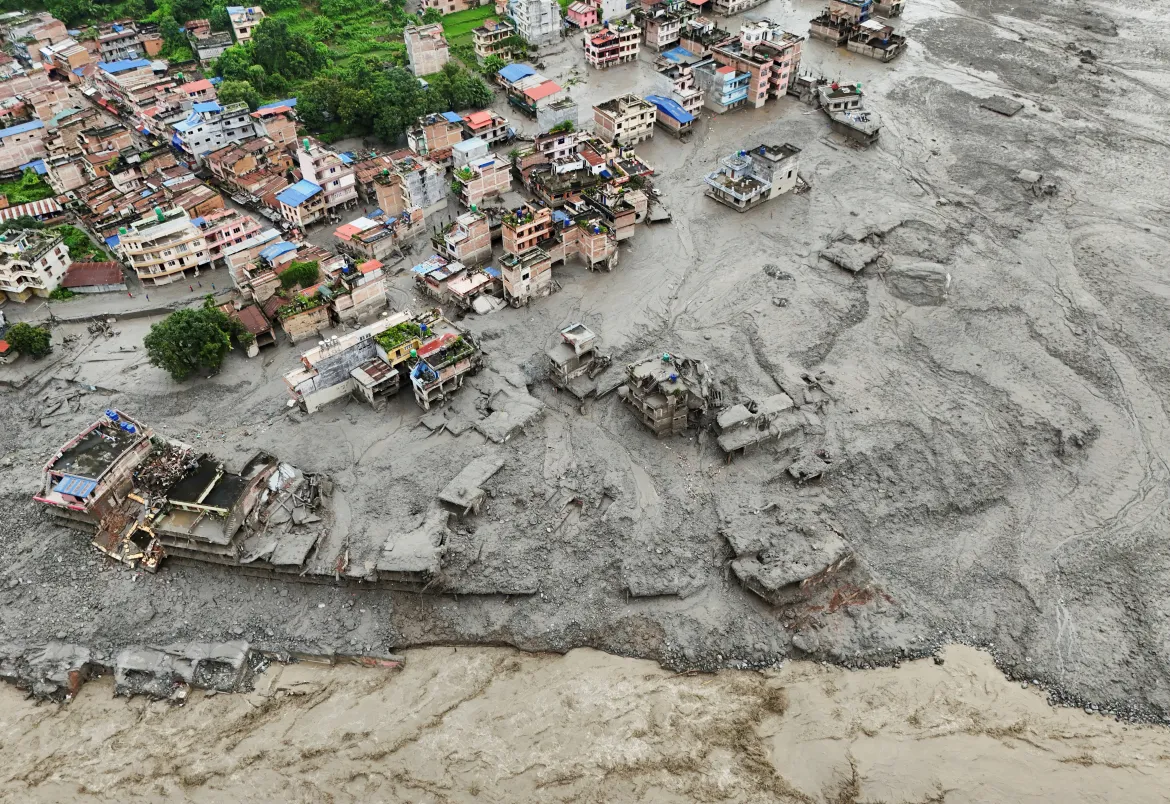
More than 1,300 people are missing after deadly Nepal-Tibet floods and glacier collapse killed at least 330 and displaced thousands.
More Than 1,300 Missing After Deadly Nepal-Tibet Floods
More than 1,300 people are missing after devastating floods and mudslides struck communities along the Nepal-China border, leaving at least 330 people dead and hundreds of others displaced across the Himalayan region.
The disaster followed a glacier collapse that sent a powerful surge of water and debris through several areas. The sudden flooding caused widespread destruction, damaging roads, bridges, buildings and key infrastructure while cutting off communities from emergency assistance.
Rescue teams are continuing to search for people who remain unaccounted for. Authorities say the scale of the destruction is making rescue operations extremely difficult. Dozens of bridges have been destroyed, while nearly 40 kilometres (25 miles) of roads have suffered significant damage.
Rescue Operations Continue in Nepal
Nepal’s security forces have been using helicopters to reach people stranded by the floods. More than 100 people were rescued from affected areas during helicopter operations on Thursday.
At least eight foreign nationals were among those airlifted to Kathmandu for safety and medical assistance. Rescue teams also evacuated people who had become trapped at facilities connected to the Trishuli hydropower project.
Emergency workers have recovered bodies far downstream from the main disaster area. Some victims were found around 100 kilometres (60 miles) away in Chitwan district, showing how powerful the floodwaters were and how far the debris and water travelled.
Dozens of injured people have also been transported to Kathmandu, where they can receive more advanced medical treatment.
Thousands Affected by Himalayan Floods
As the immediate rescue effort continues, authorities and aid organisations are increasingly turning their attention to relief and recovery. Communities in several flood-hit districts urgently need food, shelter, medical care and other essential supplies.
Around 1,200 people have been displaced from at least three villages, according to local relief officials. Many families have been forced to leave their homes because of damaged infrastructure, unsafe roads and continuing risks in flood-affected areas.
The disaster has also disrupted transportation and communication, creating additional challenges for rescue teams trying to reach isolated communities.
Severe Damage in Tibet
The flooding also caused major destruction on the Chinese side of the border. A large mudslide near the Gyirong border crossing covered surrounding areas with thick layers of mud.
In some locations, the mud was more than 1.5 metres (5 feet) deep on average, while sections of road were buried under more than 2 metres (6 feet) of debris. The extensive damage has further complicated movement through the border region.
The Himalayan region is particularly vulnerable to sudden flooding, landslides and other natural disasters because of its steep terrain, glaciers and rapidly changing environmental conditions. When large amounts of water are released suddenly, floodwaters can travel quickly through valleys and cause severe damage downstream.
Search and Relief Efforts Underway
With more than 1,300 people still missing, rescuers face a difficult race against time. Damaged roads and destroyed bridges are slowing access to affected communities, while the mountainous terrain presents additional challenges.
Authorities are coordinating rescue, evacuation and relief operations as the situation develops. Helicopter missions remain particularly important for reaching isolated areas that cannot be accessed by road.
The disaster has highlighted the vulnerability of communities living near the Nepal-Tibet border to extreme weather events and sudden glacier-related flooding. As search operations continue, authorities are expected to focus increasingly on providing shelter, medical treatment and essential supplies to survivors.
For families waiting for news of missing relatives, the search remains the most urgent priority. Rescue teams are continuing their efforts across the affected Himalayan areas while relief operations expand to support thousands of people affected by the deadly floods.