Germany criticizes Israel’s Gaza expansion plan as fears grow over annexation, ceasefire collapse, and worsening humanitarian crisis.
Germany Voices Concern Over Israeli Expansion in Gaza
Germany has expressed growing concern over Israel’s latest military plans in Gaza, marking a noticeable shift in Berlin’s tone toward one of its closest allies. The comments came after Israeli Prime Minister Benjamin Netanyahu announced that the military would expand its control over larger parts of the Gaza Strip, raising fears of permanent occupation and renewed escalation in the region.
According to German officials, Berlin opposes any long-term division or annexation of Gaza territory. The statement reflects increasing international pressure over the humanitarian situation and the future of the ceasefire agreement that was brokered earlier with support from the United States, Qatar, and Turkiye.
Netanyahu recently stated that Israeli forces had already expanded their operational control in Gaza from roughly 50 percent to 60 percent and had now been ordered to increase that figure to 70 percent. His remarks have intensified concerns that the military campaign may evolve into a prolonged occupation of significant areas of the enclave.
The ceasefire agreement introduced in October required Israeli troops to pull back behind a designated security boundary, often referred to as the “Yellow Line.” Under the terms of that deal, Israel was expected to maintain control over around half of Gaza while negotiations continued. However, Israeli forces have gradually expanded their presence beyond those limits during ongoing operations against Hamas fighters.
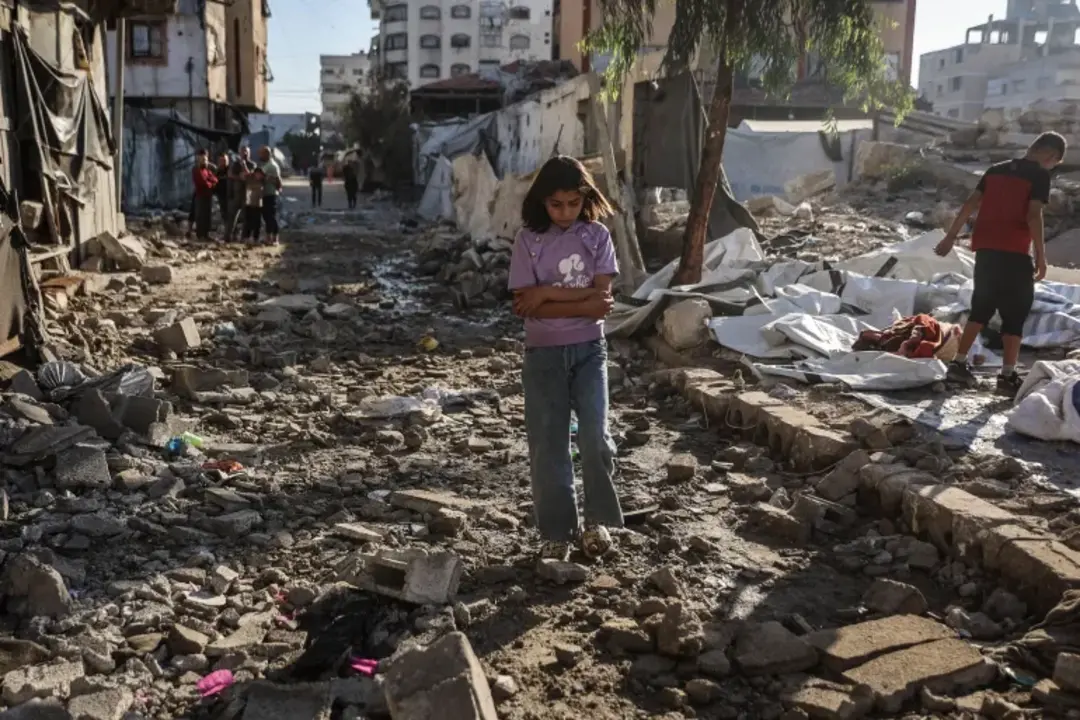
Palestinian officials and humanitarian organizations fear that the latest expansion could signal plans for permanent territorial control. Many residents already displaced by years of conflict now face worsening conditions as available living space continues to shrink. Gaza’s population of more than 2.3 million people is increasingly concentrated into smaller and overcrowded areas with limited access to food, healthcare, and basic services.
Germany has traditionally been one of Israel’s strongest European allies and remains among its largest military suppliers. However, recent developments appear to be testing that relationship. Berlin has also criticized Israeli policies in the occupied West Bank in recent months, including moves viewed internationally as steps toward annexation.
The situation became even more controversial after Israeli officials discussed efforts aimed at encouraging what they described as “voluntary emigration” of Palestinians from Gaza. Critics argue that such language is misleading given the devastation inside the territory. Large portions of Gaza’s infrastructure have been destroyed, leaving many areas without functioning hospitals, schools, clean water systems, or electricity.
Analysts believe Netanyahu’s hardline stance is partly influenced by domestic political pressure ahead of upcoming parliamentary elections. Expanding military operations could strengthen support among nationalist factions inside Israel while increasing tensions with the international community.
Human rights groups continue to warn that further military escalation could trigger a deeper humanitarian disaster. Aid agencies report that civilians in Gaza are facing severe shortages of food, medicine, and shelter. Many families have been displaced multiple times since the conflict intensified, and recovery efforts remain extremely limited due to ongoing fighting.
Recent assessments by international organizations estimate that rebuilding Gaza could require more than $70 billion over the next decade. Reports also suggest that over half of Gaza’s hospitals are no longer operational, while most educational facilities have been damaged or destroyed during the war.
Meanwhile, Israeli forces continue conducting strikes across Gaza targeting Hamas commanders and military infrastructure. Israeli authorities recently claimed responsibility for killing a senior Hamas commander during an operation earlier this week. Hamas has not officially responded to the claim.
Additional air strikes were reported in southern Gaza and eastern Gaza City, where several Palestinians were killed and others injured. Violence on both sides continues despite the existence of a fragile ceasefire framework that many now fear could collapse entirely.
The growing tension has placed international diplomacy under renewed pressure. European governments, regional powers, and humanitarian agencies are increasingly calling for restraint and a long-term political solution that prevents further suffering for civilians caught in the conflict.
As the situation develops, concerns are mounting that expanded military control in Gaza could reshape the political future of the territory and deepen instability across the Middle East.