Israel says it controls Lebanon’s Ali al-Taher ridge as tensions with Hezbollah rise, raising concerns over security, occupation and regional conflict.
Israel Claims Control of Lebanon’s Key Ali al-Taher Ridge: What It Means
Israel says its forces have taken operational control of a strategically important highland in southern Lebanon, while Hezbollah has not publicly responded to the claim.
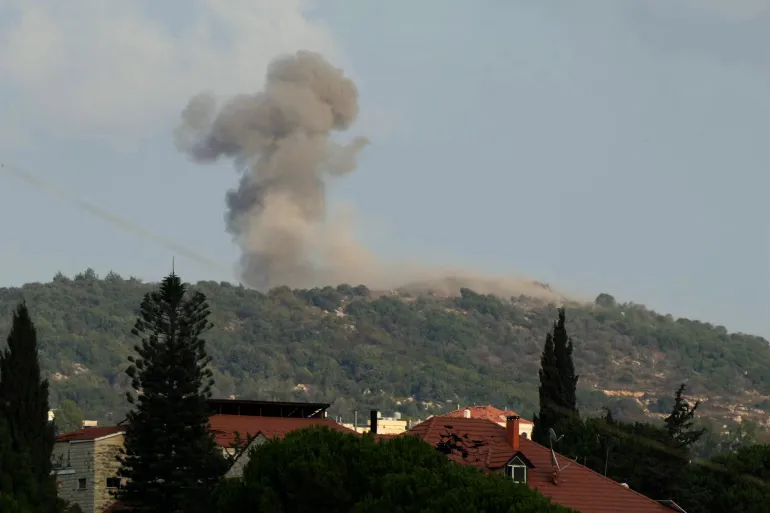
Israel says it has established operational control over the Ali al-Taher ridge in southern Lebanon, marking another significant development in its ongoing confrontation with Hezbollah.
The strategic highland is located about 15km (10 miles) from the Israeli border and rises roughly 600 metres (1,970 feet) above sea level. Its elevated position gives forces operating there an important view across large areas of southern Lebanon and toward northern Israel.
Israeli Defence Minister Israel Katz said Israeli troops had pushed Hezbollah fighters away from a network of tunnels beneath the contested area.
Katz described control of the ridge as an important step toward Israel’s stated objective of creating a security zone in southern Lebanon. He also said Israel would not leave the area until Hezbollah was disarmed and what Israel considers threats to communities in northern Israel were removed.
However, Hezbollah has not publicly confirmed or rejected Israel’s claim about control of the ridge.
Why Ali al-Taher ridge matters
The location of the ridge gives it considerable military importance.
High ground can provide forces with better visibility, making it easier to monitor surrounding territory and detect military activity. Control of Ali al-Taher could therefore strengthen Israel’s ability to observe and operate across parts of southern Lebanon.
The development also comes after Israel established control over other strategically important areas in the region, including nearby high ground around Beaufort Castle.
Together, these positions could give Israel a stronger military presence across southern Lebanon and increase pressure on Hezbollah.
The latest development has also raised questions about the future of the Israel-Hezbollah conflict and the fragile ceasefire that has been in place.
Fighting continues despite ceasefire
Israel and Hezbollah have been involved in repeated fighting since October 2023, with the conflict intensifying at several points.
Israel significantly expanded its military campaign in 2024 and again this year. Since then, Israeli forces have maintained operations in parts of southern Lebanon while describing the area as necessary for the security of northern Israeli communities.
The Israeli military presence has become increasingly controversial in Lebanon.
Lebanese communities in the south have suffered extensive damage and displacement during the conflict. Critics have accused Israel of deliberately targeting civilian infrastructure and creating conditions that could force residents to leave their homes.
Israel maintains that its military operations are aimed at Hezbollah and are necessary to prevent attacks against its territory.
The competing claims have made the situation increasingly difficult to resolve, particularly as both sides continue to view security and territorial control through very different perspectives.
Hezbollah’s silence raises questions
One of the most notable aspects of the latest development is the lack of a clear public response from Hezbollah.
Analysts say the silence could have several explanations.
It may indicate that Hezbollah is assessing the situation before responding, or that the extent of Israel’s control is more limited than the announcement suggests. Another possibility is that political or diplomatic discussions are taking place behind the scenes.
The exact level of Israeli military control over the Ali al-Taher ridge is also unclear. It is not yet publicly known how much of the surrounding area Israeli forces control or what military infrastructure remains in the region.
The uncertainty makes it difficult to determine whether the operation represents a temporary tactical move or the beginning of a longer-term Israeli military presence.
Iran’s role could become important
The situation is also closely connected to Iran’s relationship with Hezbollah.
Hezbollah is one of Iran’s most important regional allies, and Tehran has played a major role in supporting the group over many years.
Reports that Iran had warned the United States about possible consequences if Israeli attacks around the ridge continued have added another layer to the crisis.
A direct Iranian response, however, could dramatically widen the conflict.
For now, Tehran appears to be avoiding a major escalation, while Israel continues to emphasize its determination to maintain military pressure on Hezbollah.
Pressure on Lebanon’s government
Israel’s control of strategic positions in southern Lebanon could also increase pressure on the Lebanese government.
Israeli officials have repeatedly demanded stronger action against Hezbollah, particularly regarding the group’s military infrastructure and presence near the border.
Analysts argue that maintaining control of areas such as Ali al-Taher gives Israel additional leverage over Beirut.
Israel could use the military presence to push Lebanon’s government to confront Hezbollah more directly. At the same time, Lebanon faces significant political and security challenges that make such action extremely difficult.
What happens next?
The future of southern Lebanon could depend on whether the current military situation develops into a permanent Israeli presence or becomes part of a wider diplomatic agreement.
If Israel maintains control of the Ali al-Taher ridge and other strategic locations, Hezbollah could face greater restrictions on its ability to operate near the border.
But a prolonged Israeli occupation could also increase tensions, strengthen calls for resistance and make a lasting settlement more difficult.
The role of Iran will be another key factor. If Tehran decides to increase its support for Hezbollah, the situation could escalate rapidly. If it continues to avoid direct confrontation, Israel may face fewer immediate obstacles to maintaining its position.
For now, Israel’s claimed control of Ali al-Taher ridge represents an important tactical development. Whether it becomes a long-term strategic advantage or another flashpoint in the wider Israel-Hezbollah conflict will depend on what Israel, Hezbollah, Lebanon and Iran do next.