Gaza ceasefire talks restart in Cairo as violence continues. Fresh attacks, casualties, displacement, and political disputes hinder progress.
Gaza Ceasefire Talks Resume as Violence Continues Across Gaza
Efforts to revive a long-stalled ceasefire in Gaza have gained renewed attention as regional mediators host a fresh round of negotiations in Cairo. The talks come at a time when violence continues across the territory despite a pause in major military operations that has been in place since late 2025.
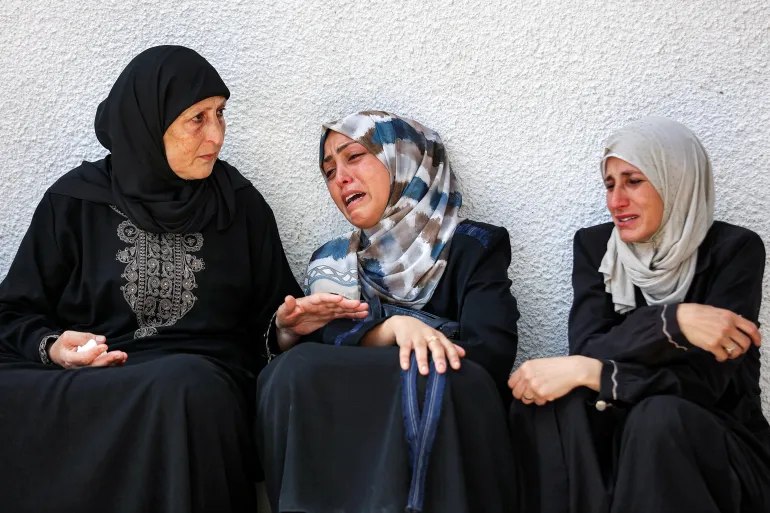
According to reports from Gaza, at least nine Palestinians were killed and dozens more injured in separate attacks across the enclave on Sunday. One of the deadliest incidents occurred in the al-Mawasi area near Khan Younis, where five people lost their lives after a strike hit a police post. Additional casualties were reported in Gaza City’s Zeitoun neighborhood and in Deir el-Balah, located in central Gaza.
The latest violence highlights the fragile nature of the current ceasefire arrangement. Although large-scale combat operations have decreased significantly compared to previous years, deadly incidents continue to occur almost daily. Residents across Gaza remain uncertain about their future as political negotiations struggle to produce a lasting agreement.
Delegations representing Palestinian factions have gathered in Cairo to meet with mediators from Egypt, Qatar, and Turkiye. The primary objective of the talks is to find a pathway toward a more comprehensive agreement that could bring an end to ongoing hostilities and establish conditions for long-term stability.
Sources familiar with the negotiations indicated that Palestinian representatives emphasized the need for a complete halt to military actions before meaningful progress can be achieved. Mediators are expected to continue discussions over the coming days in hopes of narrowing the gap between the opposing sides.
While a temporary ceasefire has reduced the intensity of fighting, key disagreements remain unresolved. One of the most significant issues is the future of armed groups operating in Gaza. Another major obstacle involves the withdrawal of Israeli forces from areas currently under military control.
The first phase of previous agreements focused on prisoner and captive exchanges. However, moving to the next stage has proven far more difficult. Political leaders on both sides continue to hold firm positions on critical security and governance issues, making a final settlement challenging.
The humanitarian situation in Gaza remains severe. Large sections of the territory have suffered extensive destruction following years of conflict. Thousands of homes, businesses, schools, and public facilities have been damaged or destroyed, leaving many families dependent on humanitarian aid for survival.
Displacement continues to affect a large portion of the population. Many residents have been forced to relocate multiple times as military operations and security measures have altered conditions across the territory. Humanitarian organizations have repeatedly warned about shortages of essential supplies, including food, clean water, medicine, and shelter materials.
Reports indicate that military-controlled zones have expanded in recent months, resulting in further displacement and significant changes to the landscape of Gaza. Entire neighborhoods that once housed thriving communities have been reduced to rubble, complicating future reconstruction efforts.
The question of rebuilding Gaza remains central to ongoing diplomatic discussions. International partners have expressed interest in supporting reconstruction projects, but many experts argue that long-term investment will only be possible if a durable political agreement is reached. Without security guarantees and a stable governing framework, rebuilding efforts may face substantial obstacles.
The conflict has also drawn increasing international attention. Governments, humanitarian agencies, and human rights organizations continue to monitor developments closely. Calls for a permanent ceasefire and a negotiated political solution have intensified as the humanitarian toll rises.
For ordinary Palestinians living in Gaza, the outcome of the Cairo talks could significantly influence daily life. Many residents hope that negotiators can reach an agreement that not only stops the violence but also creates opportunities for rebuilding communities, restoring services, and improving economic conditions.
As discussions continue behind closed doors, uncertainty remains. Diplomatic efforts face numerous challenges, but mediators remain focused on finding common ground. Whether these latest negotiations can produce meaningful progress will likely become clearer in the days ahead.
For now, the people of Gaza continue to endure the consequences of a prolonged conflict while waiting for a lasting solution that can bring peace, security, and recovery to the region.