At least eight people were killed in fresh Israeli air attacks across southern Lebanon as violence continues despite an extended ceasefire agreement and rising regional tensions.
Israeli Airstrikes Kill Eight in Southern Lebanon as Ceasefire Tensions Escalate
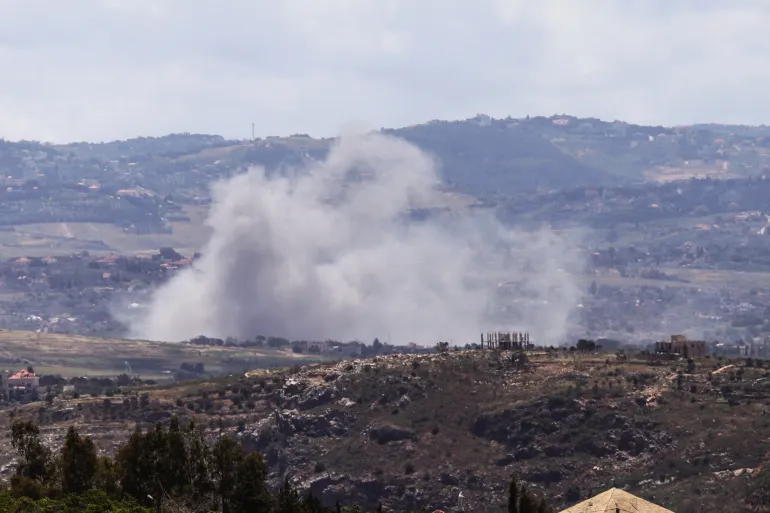
At least eight people have been killed in a new wave of Israeli airstrikes targeting southern Lebanon, raising further concerns over the fragile ceasefire agreement that has repeatedly been violated in recent months. The attacks are the latest escalation in the ongoing conflict between Israel and the Lebanese armed group Hezbollah.
According to Lebanese officials, Israeli fighter jets and drones launched multiple strikes across villages in southern Lebanon on Wednesday, causing civilian casualties and widespread destruction. Several homes were reportedly destroyed during the attacks, while emergency crews worked to recover victims from damaged buildings.
One of the deadliest strikes took place in the village of Doueir, where Israeli warplanes targeted residential areas. Five people were killed and at least two others were injured in the bombing. Eyewitnesses described scenes of panic and devastation as buildings collapsed following the explosions.
Additional attacks were reported near a hospital in the village of Tibnin, where two more people lost their lives. Another strike involving a drone attack killed a motorcyclist in the village of Burj Shemali in the Tyre district.
Rescue teams and medical workers continued operations in affected areas throughout the day. Emergency responders also recovered a body near the outskirts of Shebaa in southern Lebanon after another reported strike.
The latest violence comes despite an ongoing United States-mediated ceasefire agreement that was recently extended until early July. Although the ceasefire was intended to reduce hostilities along the Israel-Lebanon border, both sides have continued exchanging fire and carrying out military operations.
Just one day earlier, at least 16 people were reportedly killed in Israeli attacks across southern Lebanon, including women and children. Lebanese health authorities said the casualties reflected the growing toll the conflict is taking on civilians living near the border regions.
Meanwhile, Hezbollah announced that its fighters engaged in clashes with Israeli troops attempting to move deeper into Lebanese territory. The group claimed confrontations took place near the villages of Haddatha, Biyyada, and Rashaf during overnight fighting.
The conflict has increasingly spread beyond southern Lebanon into the western Bekaa Valley, an area where Hezbollah maintains significant support among local communities. Israeli military operations in these regions have raised fears that the fighting could widen further and destabilize more parts of the country.
Residents displaced by the violence described growing fear and uncertainty as attacks continue. Many families have fled their homes in search of safety while entire villages face severe destruction from ongoing air raids and military activity.
Civilians living in affected areas say the repeated attacks have devastated infrastructure, damaged homes, and disrupted daily life. Roads, healthcare facilities, schools, and essential services have all been impacted by the continuing violence.
Since the escalation of hostilities earlier this year, Lebanese authorities report that thousands of people have been killed or injured, while more than one million residents have been displaced from their homes. The humanitarian situation continues to worsen as communities struggle with shortages of food, medical supplies, and shelter.
International concern is also growing over the risk of a broader regional conflict. Analysts warn that continued military exchanges between Israel and Hezbollah could trigger a larger war involving multiple actors across the Middle East.
The conflict has drawn comparisons to the destruction witnessed in the ongoing war in Gaza, where widespread damage to civilian infrastructure and heavy casualties have generated global criticism and humanitarian concerns.
Israeli officials maintain that military operations are aimed at preventing attacks from Hezbollah and securing border areas. Hezbollah, meanwhile, says it is responding to Israeli military actions and supporting resistance efforts in the region.
Diplomatic efforts to stabilize the situation have so far failed to produce a lasting solution. International mediators continue urging restraint and calling for both sides to respect ceasefire agreements to avoid further civilian suffering.
Human rights organizations and aid agencies have repeatedly warned about the impact of the violence on ordinary civilians trapped in conflict zones. Many displaced families now face uncertain futures as fighting continues across southern and eastern Lebanon.
As tensions rise, fears are growing that the ceasefire could collapse entirely, leading to a much larger confrontation between Israel and Hezbollah. For residents living near the front lines, the daily threat of airstrikes and clashes has become a harsh reality with no clear end in sight. More