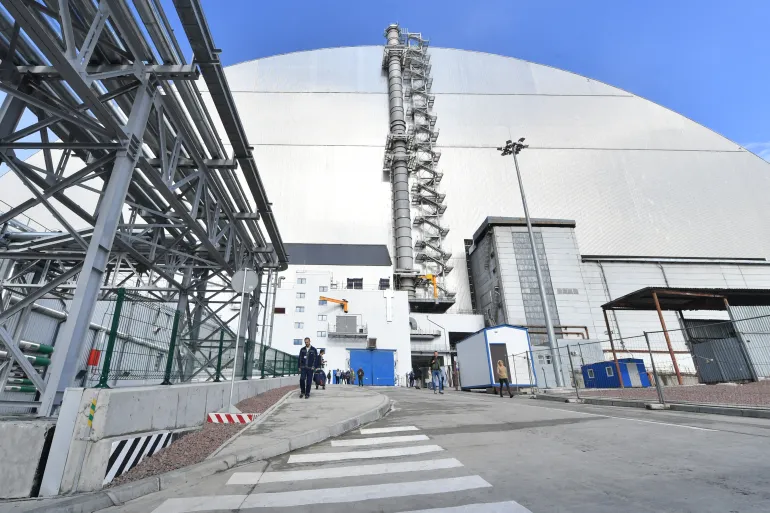
Russian drone strike damages facility near Chornobyl nuclear plant. No radiation increase detected as Ukraine reports ongoing attacks.
Russian Drone Strike Near Chornobyl Raises Nuclear Safety Concerns
A recent drone strike near the Chornobyl nuclear power plant has renewed concerns about nuclear security and the ongoing risks posed by the Russia-Ukraine war. Ukrainian officials reported that a Russian drone attack damaged a facility used for handling spent nuclear fuel near the site of the world’s worst nuclear disaster.
According to Ukrainian President Volodymyr Zelenskyy, the attack targeted a fuel reception building located close to an area where significant quantities of nuclear material are stored. Although the strike caused substantial structural damage, authorities confirmed that radiation levels remained within normal limits and there was no immediate threat to public health.
The incident occurred near the Chornobyl Exclusion Zone, approximately 15 kilometers from the infamous nuclear plant that suffered a catastrophic reactor explosion in April 1986. That disaster released radioactive contamination across large parts of Europe and remains one of the most significant nuclear accidents in history.
International nuclear experts were quickly informed about the strike. Ukraine’s nuclear authorities stated that no spent nuclear fuel was being stored in the affected building at the time of the attack, reducing the risk of a serious radioactive incident. Emergency crews responded rapidly to extinguish a fire caused by the strike, and officials reported no injuries.
President Zelenskyy strongly condemned the attack, describing it as a dangerous escalation and accusing Russia of deliberately targeting infrastructure connected to nuclear safety. He emphasized that while radiation readings remain stable, the attack demonstrates increasing risks to critical facilities during the ongoing conflict.
Nuclear safety has become a major concern since the start of Russia’s full-scale invasion of Ukraine in 2022. Several nuclear-related sites have faced threats from military operations, prompting repeated warnings from international organizations. Experts have stressed that attacks near nuclear facilities carry the potential for severe consequences, even when direct damage to reactors or radioactive materials is avoided.
The latest incident follows a previous allegation in 2025 that a drone strike damaged a protective structure covering the reactor destroyed during the 1986 Chornobyl disaster. Although the containment system continued to function, the event highlighted the vulnerability of nuclear infrastructure in active conflict zones.
International nuclear inspectors are expected to assess the latest damage and evaluate whether additional safety measures are required. Monitoring teams continue to track radiation levels in the region, which remain consistent with normal background readings.
While concerns about nuclear safety dominated headlines, Russian drone attacks also caused casualties in other parts of Ukraine. Regional authorities reported that at least two civilians were killed during separate strikes.
In the southern Zaporizhia region, a 56-year-old minibus driver lost his life after a drone attack. Emergency responders confirmed the fatality and launched investigations into the circumstances surrounding the strike.
Meanwhile, in the central Dnipropetrovsk region, another civilian was killed during a wave of drone and aerial bomb attacks. Local officials said the strikes damaged infrastructure and injured at least one additional person. Emergency services were deployed to affected areas to assist residents and assess damage.
Ukraine’s air force reported a large-scale overnight assault involving hundreds of drones. According to military officials, the majority of the incoming drones were intercepted by Ukrainian air defense systems, preventing even greater destruction. Nevertheless, several attacks reached their intended targets, causing damage and casualties.
The renewed wave of attacks comes at a critical moment in international diplomacy. European leaders have gathered in the United Kingdom to discuss strategies aimed at increasing pressure on Russia and strengthening support for Ukraine.
President Zelenskyy is scheduled to meet with the leaders of France, Germany, and the United Kingdom as part of ongoing consultations regarding the future of the conflict. The three European powers have remained among Ukraine’s strongest supporters throughout the war, providing military, economic, and humanitarian assistance.
Diplomatic efforts to end the conflict have faced significant challenges. Earlier this week, Zelenskyy publicly proposed a direct meeting with Russian President Vladimir Putin and reiterated his willingness to support a comprehensive ceasefire. However, Russian leadership rejected the proposal, indicating that conditions for such talks have not yet been met.
As the war enters another year, both military operations and diplomatic initiatives continue simultaneously. The latest drone strike near Chornobyl serves as a reminder of the broader risks associated with the conflict, particularly when critical infrastructure and nuclear-related facilities are involved.
With international attention focused on both battlefield developments and peace efforts, global leaders continue to monitor the situation closely. For many observers, ensuring the safety of nuclear facilities remains one of the most urgent priorities as the war continues to unfold.