The US has completed its troop withdrawal from Iraq, ending its anti-ISIL mission and beginning a new phase of Iraqi-led security.
US Troop Withdrawal From Iraq Is Now Complete
The United States has completed the withdrawal of its remaining troops from Iraq who were deployed as part of the international campaign against ISIL, marking the end of a major chapter in the country’s two-decade history of foreign military intervention.
The Pentagon confirmed that the final US and international coalition personnel involved in the anti-ISIL mission had left Erbil Airbase in Iraq’s semi-autonomous Kurdistan region. The departure represents the conclusion of a years-long process to reduce the foreign military presence and transfer greater responsibility for national security to Iraqi forces.
US Defense Department spokesman Sean Parnell said the remaining American and coalition personnel, along with military equipment, completed an orderly departure from the base.
The withdrawal follows more than 20 years of US military involvement in Iraq. American forces first entered the country in 2003 as part of the broader war on terror. US troop levels eventually reached about 170,000 personnel in 2007.
American forces formally left Iraq in 2011, but returned several years later as ISIL expanded across Iraq and Syria. In 2015, the United States redeployed troops as part of an international military campaign aimed at defeating the armed group.
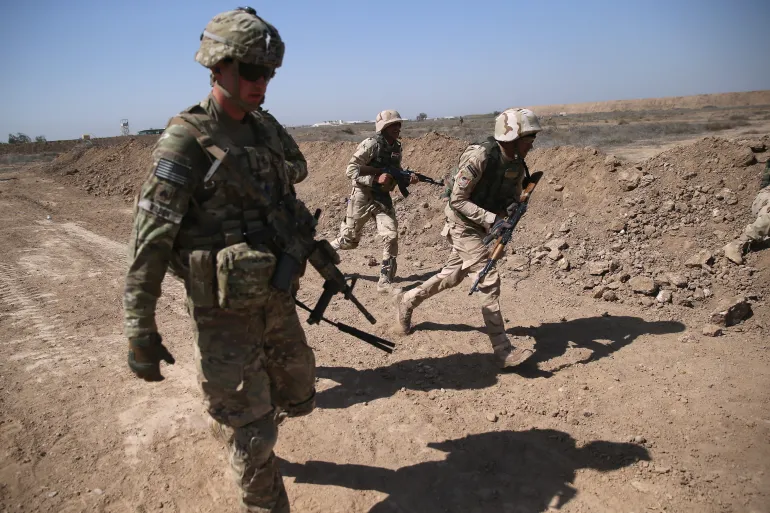
After ISIL lost control of its major territorial strongholds in Iraq in 2017, the role of foreign forces gradually shifted from combat operations toward training, advising and intelligence support for Iraqi security forces.
By the end of 2025, the remaining foreign troops had been concentrated at Erbil, where they continued supporting the fight against ISIL remnants.
US Ends Anti-ISIL Mission in Iraq
The Pentagon described the withdrawal as the conclusion of a 12-year campaign that significantly weakened ISIL as an organised military force in Iraq and the wider region.
The United States has said the end of its military mission does not mean the end of security cooperation with Iraq. Instead, Washington plans to maintain a more conventional bilateral security relationship with Baghdad.
Responsibility for dealing with remaining security threats will now rest primarily with the Iraqi government and its security institutions. These include the Iraqi Security Forces, Kurdish Peshmerga and other forces operating in the Kurdistan region.
US officials have also said that Washington will continue providing selected training and intelligence assistance to its Iraqi partners.
The US Central Command has moved the task force responsible for anti-ISIL operations to Jordan. Hundreds of US troops remain in neighbouring Syria as part of the broader regional security effort.
Before the latest departure, about 1,500 US and coalition personnel were based at Erbil.
A New Security Phase for Iraq
The withdrawal comes at a sensitive time for Iraq. Although the country has experienced a period of relative stability, it remains surrounded by regional conflicts and competing security interests.
Iraqi leaders have welcomed the departure of US forces as an important step toward strengthening national sovereignty. The government has also indicated that future relations with Washington should increasingly focus on economic cooperation and traditional bilateral security ties.
The Iraqi government is simultaneously working to address the influence of armed militias, including groups closely aligned with Iran. Authorities have set out plans to bring powerful armed groups under greater state control.
The issue remains politically and militarily sensitive. Some Iran-aligned militias have previously cited the presence of US troops as a reason for maintaining their weapons and independent military structures.
Concerns Over ISIL and Regional Threats
Despite the end of ISIL’s territorial control in Iraq, the group has not disappeared completely. ISIL continues to maintain underground networks and small cells in parts of Iraq and Syria.
Iraqi security officials have repeatedly warned that the group could attempt to increase attacks if security conditions deteriorate. The absence of US troops will therefore place greater responsibility on Iraqi forces to identify and contain ISIL activity.
Kurdish officials have also expressed concerns about the consequences of the US withdrawal. Some have warned that reduced American involvement could leave the Kurdistan region more exposed to regional threats and potential ISIL attacks.
Iraqi authorities, however, maintain that their security forces have gained sufficient experience and capabilities to confront the remaining threats without a permanent US military presence.
The completion of the US troop withdrawal marks a significant change in Iraq’s security landscape. The country is now entering a period in which Iraqi forces will take the leading role in maintaining security, while the United States is expected to rely more heavily on diplomatic, economic, intelligence and bilateral security cooperation.
The long-term impact of the withdrawal will depend on Iraq’s ability to maintain internal stability, manage armed groups and prevent ISIL from rebuilding its operational networks.