Israeli forces cross Lebanon’s Litani River as air strikes intensify, worsening the humanitarian crisis and raising regional tensions.
Israeli Forces Advance Beyond Litani River in Lebanon
The conflict between Israel and Hezbollah has entered a dangerous new phase after Israeli forces reportedly crossed the Litani River in southern Lebanon during an expanded military offensive. The latest escalation has triggered heavy air strikes, civilian casualties, mass displacement, and growing fears of a wider regional conflict in the Middle East.
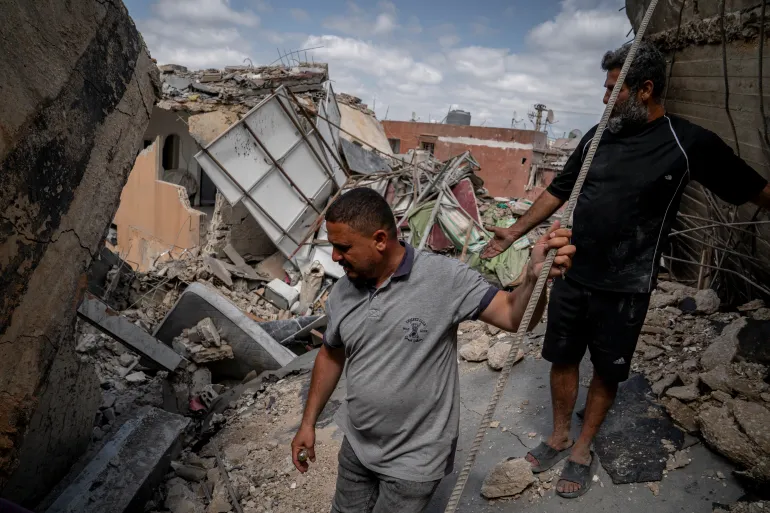
Israeli military operations intensified across southern Lebanon on Friday, with multiple towns coming under attack. Local authorities confirmed that at least five people were killed in separate Israeli air strikes. Four civilians died after a residential building was hit in the town of Abbasiyeh near Tyre, while another person was killed in Deir Qanoun al-Nahr. Several others suffered injuries as strikes targeted roads, vehicles, and populated neighborhoods.
The military escalation comes despite ongoing diplomatic efforts aimed at securing a ceasefire between Israel and Lebanon. Lebanese and Israeli military officials are expected to hold security discussions in Washington, where Lebanon plans to demand an immediate halt to Israeli attacks and military operations.
Lebanese President Joseph Aoun has emphasized the urgent need for a ceasefire, warning that continued violence could further destabilize the country and deepen the humanitarian crisis. International mediators continue to push for diplomatic negotiations, but fighting along the Israel-Lebanon border has continued to intensify.
Israeli Prime Minister Benjamin Netanyahu confirmed that Israeli troops had crossed the Litani River, a strategically important river located around 30 kilometers north of the Israeli border. The move marks a significant expansion of Israel’s ground offensive in Lebanon and signals deeper military involvement inside Lebanese territory.
According to military sources, Israeli forces are also conducting operations in Beirut and the Bekaa Valley as part of a broader campaign targeting Hezbollah infrastructure and military positions. Analysts believe this is one of the largest Israeli military advances into Lebanon in recent years.
Air strikes have heavily targeted areas in southern Lebanon, particularly in the Nabatieh district, where residents reported continuous bombardment. Several towns received evacuation warnings as Israeli military operations expanded further north.
The humanitarian situation in Lebanon is rapidly worsening as thousands of families flee their homes to escape the violence. Entire communities in southern Lebanon are facing severe shortages of food, medicine, electricity, and clean water. Aid organizations warn that the ongoing conflict is pushing the country toward a humanitarian disaster.
Children have been among the worst affected by the violence. Humanitarian officials reported a sharp increase in child casualties over the past week, with dozens of children killed or injured in Israeli air strikes. The rising number of civilian deaths has sparked international concern and renewed calls for the protection of civilians under international humanitarian law.
Medical facilities in southern Lebanon are struggling to cope with the growing number of casualties. Nearly 40 hospitals and healthcare centers are reportedly no longer functioning due to damage caused by air strikes, lack of medical supplies, and security threats. Doctors and emergency workers are operating under extremely dangerous conditions while trying to treat the wounded.
Emergency rescue teams are also facing serious risks during relief operations. Aid workers say rescue crews fear secondary strikes targeting emergency responders after initial bombings, making rescue missions increasingly dangerous. Humanitarian organizations warn that continued attacks on civilian infrastructure could completely overwhelm Lebanon’s healthcare system.
Several international medical charities operating in southern Lebanon have warned they may be forced to suspend operations if security conditions continue to deteriorate. Relief agencies are urging the international community to ensure safe humanitarian access and protect civilians trapped in conflict zones.
The ongoing Israel-Hezbollah conflict has raised fears of a broader regional war involving multiple armed groups across the Middle East. Political analysts warn that continued military escalation could destabilize neighboring countries and increase tensions throughout the region.
Residents across southern Lebanon remain caught in the middle of the fighting, facing constant air strikes, displacement, and uncertainty about their future. Many families have abandoned their homes with little more than basic belongings as violence spreads across towns and villages.
International pressure is growing on both Israel and Hezbollah to prevent further civilian casualties and avoid a full-scale regional conflict. However, with Israeli troops advancing beyond the Litani River and air strikes continuing across Lebanon, the situation remains highly volatile and unpredictable.
Diplomatic efforts to secure a ceasefire continue, but the ongoing military operations suggest that tensions between Israel and Hezbollah are far from over. As the conflict deepens, concerns are mounting over the long-term humanitarian and political consequences for Lebanon and the wider Middle East.