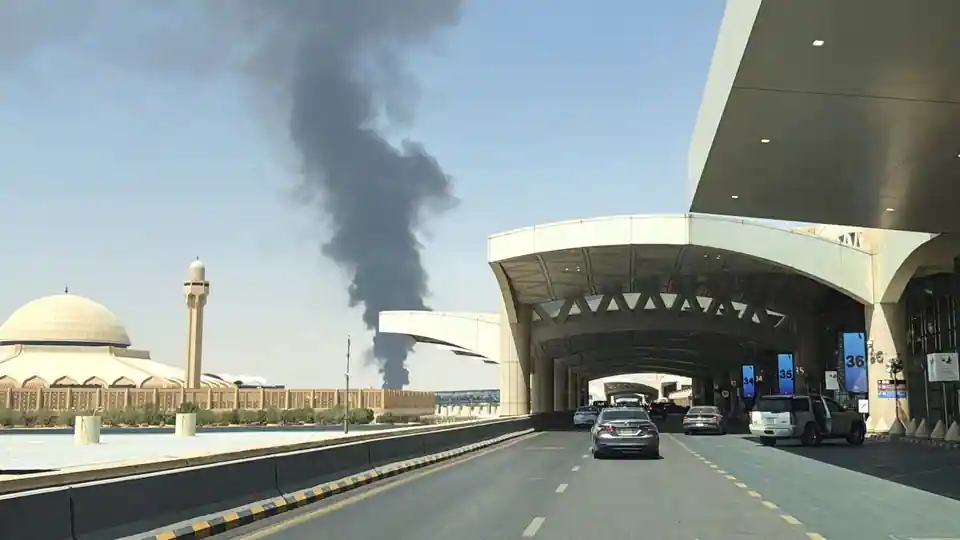
Yemen’s Houthis claim a missile strike on Saudi Arabia’s Defence Ministry in Riyadh as Saudi forces report intercepting missiles and drones.
Yemen’s Houthis Claim Missile Strike on Saudi Defence Ministry in Riyadh
Yemen’s Houthi movement has claimed responsibility for a missile attack targeting Saudi Arabia’s Defence Ministry in Riyadh, raising tensions as the conflict between the group and Saudi-backed forces intensifies. The announcement came on Tuesday, October 27, after Saudi authorities reported intercepting missiles launched toward the kingdom.
Houthi military spokesperson Yahya Saree said the group had targeted the ministry with a ballistic missile and claimed the strike directly hit its intended target. However, the reported impact has not been independently verified, and the available reporting does not establish the extent of any damage to the ministry.
The claim comes amid a broader escalation involving missile and drone launches, Saudi military operations in Yemen and growing concerns about the security of important regional transport and energy infrastructure.
Saudi Arabia Reports Missile and Drone Interceptions
The Saudi-led coalition operating in Yemen said on Tuesday that its forces intercepted and destroyed three ballistic missiles launched toward Saudi Arabia’s Eastern Region and four drones directed at the country’s southern region.
Saudi Civil Defense also issued early-warning alerts concerning potential hostile threats in the Eastern Region and Kharj governorate. Authorities later announced that the danger had passed in both areas, according to Reuters.
These reported interceptions provide evidence of continuing aerial threats to Saudi territory. However, they do not independently confirm the Houthis’ separate assertion that their missile struck the Defence Ministry in Riyadh.
The latest developments follow a series of Houthi claims involving Saudi airports, oil facilities and other strategic locations. Saudi officials and the Saudi-led coalition have separately reported defensive operations and military action against Houthi positions in Yemen.
Conflict Spreads Across Strategic Locations
The latest confrontation is part of a wider deterioration in relations between the Houthis and Saudi Arabia. The Iran-aligned movement has expanded its attacks on Saudi targets while Saudi forces have intensified military operations against Houthi positions in Yemen.
On October 26, the Houthis said they had attacked Saudi Arabia’s East-West crude oil pumping stations and King Khalid International Airport in Riyadh. Saudi authorities had not immediately confirmed those particular claims, Reuters reported.
The coalition said it had destroyed two ballistic missile launchers in Sanaa, Yemen’s capital, including one it identified as having been used to launch a missile toward Riyadh.
The coalition also reported a separate operation against Houthi military infrastructure in Yemen. According to its spokesperson, Turki al-Maliki, the operation destroyed five tunnels used to store ballistic missiles, four missile launchers and a missile storage facility. The coalition said it had also targeted supply routes, fighters and military equipment near front lines.
The competing military announcements highlight the difficulty of establishing the full impact of individual attacks during the rapidly changing conflict.
Why the Bab el-Mandeb Strait Matters
One of the most important factors behind the escalation is the strategic importance of Yemen’s Red Sea coastline.
The Houthis captured key areas along the coast last month and advanced toward the Bab el-Mandeb Strait, a narrow maritime passage connecting the Red Sea with the Gulf of Aden. The route is important for international shipping, including vessels transporting energy supplies between the Middle East and global markets.
The Strait of Hormuz, another major route for oil shipments, has also faced severe disruption amid the wider regional conflict. These overlapping security threats have increased concerns about the reliability of energy transportation and the potential economic consequences of further escalation.
Attacks or threats affecting oil infrastructure and major shipping routes can have consequences beyond the immediate conflict zone. Disruptions to transport, insurance costs and energy supplies may affect businesses and consumers in multiple countries.
Nevertheless, the consequences of any individual attack depend on whether it occurred, the extent of the damage and how authorities respond. Claims of successful strikes should therefore be distinguished from independently confirmed incidents.
Background to the Saudi-Houthi Conflict
The current escalation follows years of conflict in Yemen. The Houthis seized Sanaa in 2014, forcing Yemen’s internationally recognised government from the capital. Saudi Arabia led a military coalition into the conflict in 2015 to support the government against the movement.
A United Nations-brokered truce established in 2022 largely halted attacks between the Houthis and the Saudi-led coalition for an extended period. However, renewed fighting has effectively ended that arrangement, according to Reuters.
The latest clashes have coincided with Houthi advances in strategically important coastal areas and intensified Saudi strikes inside Yemen. The confrontation has also become connected to wider regional hostilities involving Iran and the United States and Israel, increasing concerns about the potential for further military escalation.
The latest developments demonstrate how renewed fighting in Yemen can affect regional security well beyond the country’s borders.
What Happens Next?
As of October 27, the Houthis had publicly claimed that their missile struck Saudi Arabia’s Defence Ministry in Riyadh, while Saudi authorities had reported intercepting missiles and drones targeting other parts of the kingdom.
The available reports do not independently establish that the ministry was hit or clarify whether the claimed attack caused damage. Further statements from Saudi authorities and additional independently verified reporting would be needed to establish the full circumstances.
The immediate situation remains tense, with military operations continuing and strategic infrastructure under threat. Whether the confrontation expands further will depend on subsequent military actions, official responses and any diplomatic efforts to reduce hostilities.
For now, the claimed Riyadh strike represents another development in an escalating conflict whose effects extend to regional security, energy infrastructure and international shipping.
Editorial Source Note: This report is based on information published by Hindustan Times and other reputable news organizations, including Reuters. Claims made by the Houthis and statements from Saudi authorities are attributed to their respective sources. The reported missile strike on Saudi Arabia’s Defence Ministry in Riyadh has not been independently verified. UsaReporters will update this report if further verified information becomes available.
Published: October 27, 2026 | Category: Middle East