France faces nationwide protests as Yellow Vest activists join students and unions demanding lower living costs, better schools and stronger public services.
France Braces for Nationwide Protests as Yellow Vests Join Students
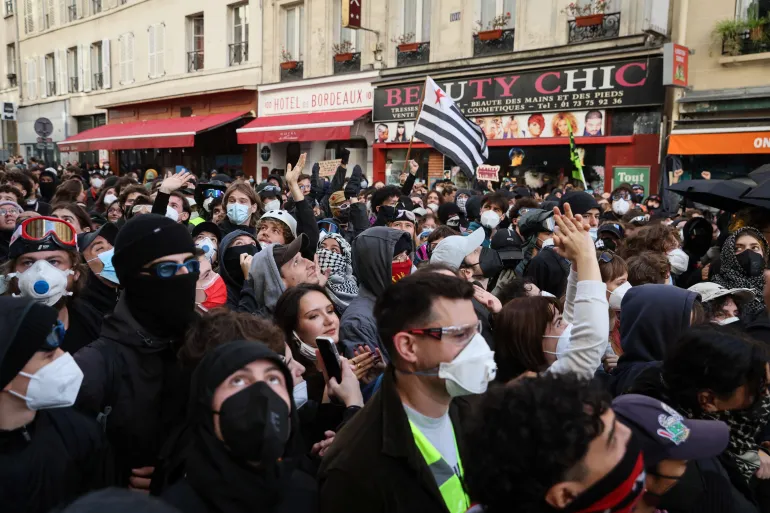
France faced a day of nationwide demonstrations on October 17, 2026, as high school students, trade union members and activists associated with the Yellow Vest movement mobilised around concerns over rising living costs, education conditions and economic inequality. The protests brought together groups with different priorities amid growing dissatisfaction with public services and household financial pressures.
France Faces Widening Protests Over Living Costs and Education
The demonstrations developed from student-led protests that began in mid-September at high schools in the Paris suburbs. Students initially raised concerns about inadequate school facilities, overcrowded classrooms and shortages of teachers. Over time, the movement broadened to include criticism of economic inequality, public spending and declining living standards.
By midday on October 17, French authorities had recorded 140 demonstrations involving 32,800 people outside the Paris region, according to Reuters. The figures reflected activity at that point in the day, rather than a final nationwide attendance total.
Yellow Vest Activists Return to the Streets
The involvement of Yellow Vest activists added a familiar dimension to the latest unrest. The movement, known in France as Gilets jaunes, emerged in 2018 in opposition to fuel-tax increases before expanding into a broader campaign against living costs and economic inequality.
The movement became a major challenge for President Emmanuel Macron during his first term. Although its street mobilisation eventually declined after the government announced financial concessions, frustration over purchasing power has continued to feature in French public debate.
Ahead of the October 17 demonstrations, activists used social media to encourage former Yellow Vest participants to join students and other groups. Trade unions also supported the mobilisation, seeking to connect education concerns with demands for better wages, pensions and public services.
Jerome Rodrigues, a prominent Yellow Vest activist, called for solidarity among students, workers and pensioners in a video message reported by Al Jazeera. His appeal reflected an effort to unite people facing different forms of economic pressure.
However, the participation of groups with different objectives does not necessarily mean they share a single political programme. The demonstrations brought together a range of grievances, from school funding to fuel prices and the cost of everyday necessities.
Police Clashes and Concerns About Public Safety
The demonstrations also raised concerns about public order and the police response. Reuters reported that officers used tear gas and clashed with protesters in several French cities on Saturday. Authorities reported vandalism and attacks targeting police, journalists and public buildings in some locations.
In Marseille, the mayor said the city hall building had been vandalised, prompting additional police deployment. Central Paris also saw a substantial security presence, with restrictions around prominent landmarks and designated demonstration routes.
The police response has become a contentious issue during the student protests. According to Reuters, Prime Minister Sébastien Lecornu said more than 900 police officers had been injured since the demonstrations began. The report also noted that a police watchdog was investigating at least two dozen allegations of police violence.
The reported injuries among young demonstrators have intensified scrutiny of crowd-control methods. One teenager lost a hand after picking up a stun grenade, according to reporting by Reuters and other news organisations. France had suspended the use of stun grenades during student demonstrations, although Interior Minister Laurent Nuñez said they could be used during the October 17 operation if necessary.
These developments have sharpened debate over how authorities can maintain public safety while respecting the right to peaceful protest. Allegations of police misconduct remain subject to investigation, while reports of attacks and vandalism have also prompted concerns about the safety of demonstrators, journalists and residents.
Macron Government Under Economic Pressure
The protests come at a difficult political moment for Macron, whose presidency has faced repeated demonstrations over economic reforms, pensions and public spending.
France is also dealing with pressure on public finances. Reuters reported that efforts to reduce government debt had failed to reassure investors, with borrowing costs reaching their highest levels in more than two decades.
For protesters, the immediate concerns are more personal: the affordability of fuel and other essentials, the ability of wages and pensions to cover expenses, and whether schools have sufficient resources to educate students effectively.
The CGT, one of France’s major trade unions, has backed demands for higher wages and pensions, lower prices and the protection of public services. Such demands have helped connect the student movement with workers and other sections of society.
President Macron called for calm and respect for people and property before the demonstrations. His government has faced the challenge of responding to economic dissatisfaction while preventing further violence and protecting the public’s right to demonstrate.
What Happens Next?
The October 17 demonstrations marked a significant expansion of France’s student-led unrest, bringing together education campaigners, trade unions and some veterans of the Yellow Vest movement.
The eventual scale and political impact of the mobilisation will depend on whether the participating groups maintain their cooperation and whether the government responds to their demands. The latest reports document demonstrations and clashes during the day, but they do not establish a final nationwide attendance figure or a resolution to the protesters’ grievances.
For now, the protests have placed the cost of living, school conditions, public services and police conduct at the centre of France’s domestic debate. Further developments will depend on the government’s response and the course of demonstrations in the days ahead.
Source note: This article draws on Al Jazeera’s October 17 report and additional reporting from Reuters and The Associated Press. Attendance figures and allegations are attributed to the reporting sources and authorities.