Explore how India’s historic protests, from anti-Hindi agitation to farmers’ movements, have shaped democracy, social justice, and political change.
How Protests Have Shaped India: A History of People Power
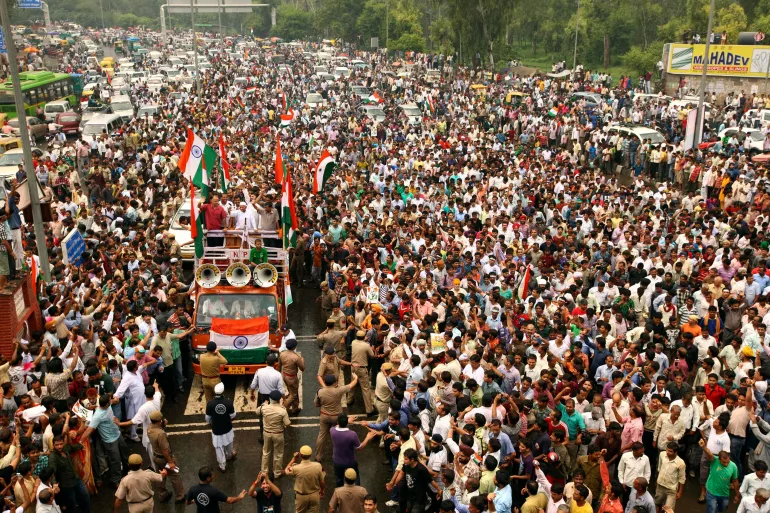
India has a long history of public protests that have influenced its politics, challenged government decisions, and brought major social changes. From the anti-Hindi agitation of the 1960s to the farmers’ protests against agricultural laws, mass movements have played a significant role in shaping the country’s democracy.
Recent demonstrations over alleged electoral irregularities and demands for the resignation of Chief Election Commissioner Gyanesh Kumar highlight the continuing importance of public dissent in India. Students, opposition parties, and civil society groups have joined forces to demand accountability and electoral reforms. These events reflect a broader tradition in which ordinary citizens have challenged political leaders and government policies.
Anti-Hindi Protests and Regional Identity
One of India’s most influential protest movements took place in 1965, when widespread opposition emerged against the proposed expansion of Hindi as the central government’s official language. Many people in southern India, particularly Tamil speakers, feared that the change would disadvantage them in government employment, education, and public administration.
Student groups and regional political leaders organised demonstrations, sometimes resulting in violent clashes with police. The movement gained significant momentum in Tamil Nadu and strengthened demands for linguistic equality.
Prime Minister Lal Bahadur Shastri eventually assured the public that English would continue to be used alongside Hindi. In 1967, the Dravida Munnetra Kazhagam won the Tamil Nadu state election, ending the Congress party’s dominance in the state. The protests became a defining moment in India’s federal politics and demonstrated the importance of respecting regional identities.
The JP Movement and India’s Emergency
During 1973 and 1974, student protests in Gujarat and Bihar developed into a nationwide movement against corruption, inflation, and government mismanagement. Led by socialist leader Jayaprakash Narayan, the movement called for sweeping political and social reforms under the slogan of “Total Revolution.”
The protests challenged Prime Minister Indira Gandhi’s government and contributed to a period of intense political confrontation. On June 25, 1975, Gandhi declared a national Emergency, during which civil liberties were restricted and press censorship was imposed.
Following the end of the Emergency, opposition parties united and defeated the Congress party in the 1977 general election. India formed its first national government led by a party other than Congress, demonstrating how mass protests can reshape a country’s political landscape.
Mandal Commission Protests and Caste Reservation
In 1990, Prime Minister Vishwanath Pratap Singh announced plans to implement the Mandal Commission’s recommendation to reserve 27 percent of central government jobs for Other Backward Classes (OBCs).
The decision sparked widespread protests, particularly among students from relatively privileged castes who feared increased competition for government employment. Supporters of reservation policies, however, argued that affirmative action was necessary to address historical caste discrimination and unequal opportunities.
The controversy generated intense national debate about social justice, equality, and representation. In 1992, India’s Supreme Court upheld the central government employment quota, subject to conditions including the exclusion of the relatively affluent “creamy layer.” The issue continues to influence Indian politics and discussions about social equality.
Economic Reforms and Workers’ Protests
India introduced major economic reforms in 1991, reducing restrictions on private businesses and encouraging foreign investment. While these changes helped transform the economy, trade unions expressed concerns about job security, privatisation, and workers’ rights.
Labour organisations and left-wing political groups organised strikes and demonstrations against policies they believed could weaken employment protections. Although the protests did not stop economic liberalisation, debates over labour rights and privatisation remain important in India’s economic and political discussions.
Anti-Corruption Movement of 2011
In 2011, public anger over corruption allegations involving government officials fuelled a nationwide anti-corruption movement. Social activist Anna Hazare became its most recognisable leader, using hunger strikes to demand stronger accountability measures.
The movement attracted large crowds and helped bring corruption into the centre of national political debate. Activists demanded an independent institution capable of investigating allegations against public officials.
Parliament passed legislation establishing a Lokpal framework in 2013. The movement also encouraged a shift towards electoral politics, helping Arvind Kejriwal and other activists establish the Aam Aadmi Party in 2012.
Protests for Women’s Safety in 2012
The gang rape and assault of a 23-year-old student in New Delhi in December 2012 triggered nationwide demonstrations against sexual violence. The victim, widely known as Nirbhaya, died from her injuries later that month.
Students, women’s rights activists, and ordinary citizens demanded stronger laws, better policing, safer public spaces, and faster justice for survivors of sexual violence.
The protests helped build pressure for legal reforms. The Criminal Law (Amendment) Act, 2013, expanded the legal framework addressing sexual offences and strengthened penalties for several crimes. However, concerns about violence against women and the enforcement of existing laws remain significant.
Citizenship Law Protests and Shaheen Bagh
India’s Citizenship Amendment Act (CAA), passed in December 2019, created an expedited citizenship pathway for certain non-Muslim migrants from Afghanistan, Bangladesh, and Pakistan who arrived before the end of 2014.
Critics argued that excluding Muslims from the law raised serious questions about religious equality and India’s secular principles. Demonstrations spread across the country, with the Shaheen Bagh sit-in in New Delhi becoming a prominent symbol of resistance.
In February 2020, communal violence in northeastern Delhi killed more than 50 people, most of them Muslims. The protests did not secure repeal of the legislation, which the government brought into operation in March 2024.
Farmers’ Protests Force a Government Reversal
In 2020, the government introduced three agricultural laws intended to change how farmers sold their produce. Many farmers feared the reforms would weaken regulated wholesale markets and undermine the minimum support price system.
Farmers’ unions organised a major protest movement, with thousands camping outside Delhi for months. The demonstrations drew nationwide attention and created sustained pressure on the government.
In November 2021, Prime Minister Narendra Modi announced that the three laws would be repealed. The decision marked a major victory for the protesters and demonstrated the potential influence of sustained collective action.
Student Protests and Electoral Accountability
Student-led demonstrations over examination irregularities, unemployment, and government accountability have continued to shape India’s political debate. Recent youth-led protests have also focused on alleged electoral irregularities and demands for changes in election administration.
These movements show how younger generations are increasingly using demonstrations and organised campaigns to demand transparency and institutional reform.
Conclusion
From language rights and caste equality to anti-corruption campaigns, women’s safety, citizenship laws, and farmers’ demands, protests have repeatedly influenced India’s political development.
Although not every movement achieves its objectives, public demonstrations can force governments to reconsider policies, encourage legal reform, and strengthen democratic debate. India’s history shows that peaceful protest remains an important way for citizens to express grievances, challenge authority, and demand accountability.