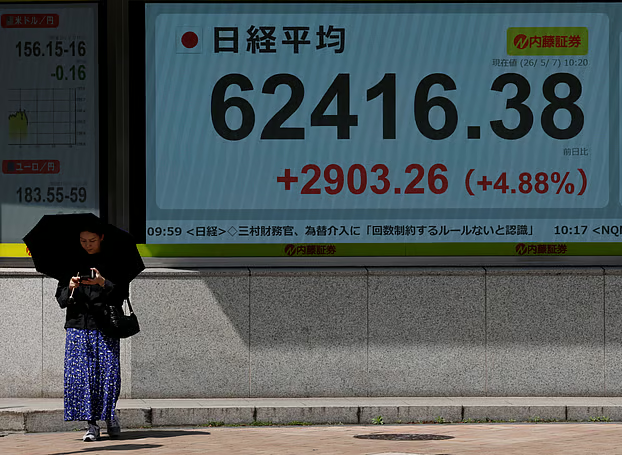
Global stock markets climbed near record highs while oil prices fell sharply amid growing optimism over a possible US-Iran peace agreement and easing geopolitical tensions.
Global Stocks Rally Near Record Highs as Oil Prices Fall on US-Iran Peace Hopes
Global stock markets moved closer to record highs on Thursday as investors reacted positively to growing optimism surrounding a possible peace agreement between the United States and Iran. At the same time, oil prices continued to decline sharply, easing concerns about inflation and pressure on the global economy.
Investor confidence improved after signs emerged that diplomatic efforts between Washington and Tehran could help reduce tensions in the Middle East. Although uncertainty remains over the future of the strategically important Strait of Hormuz, financial markets welcomed the possibility of reduced conflict and more stable energy supplies.
The global stock rally pushed several major indexes toward historic highs. MSCI’s All-Country World Index rose modestly and remained close to record territory, while markets across Europe and Asia also posted gains.
In Europe, the STOXX 600 index held near recent highs after a strong rally earlier in the week. Asian markets delivered even stronger performances, with MSCI’s Asia-Pacific index outside Japan reaching a fresh all-time high.
Meanwhile, Japan’s benchmark Nikkei 225 crossed the 62,000 level for the first time after trading resumed following an extended holiday weekend. The milestone reflected growing investor optimism about corporate earnings, economic resilience and easing geopolitical tensions.
Oil Prices Continue to Slide
One of the biggest market developments was the sharp decline in oil prices. Brent crude oil fell more than 1 percent, trading below $100 per barrel after suffering an even larger drop during the previous trading session.
The decline in oil prices came as traders anticipated a possible peace agreement between the US and Iran that could reduce supply disruptions in the region.
Despite the recent fall, oil prices remain significantly higher than levels seen earlier in the year. Analysts note that energy markets are still under pressure because of ongoing geopolitical risks and uncertainty surrounding shipping routes in the Middle East.
The Strait of Hormuz remains a critical concern for investors because a large percentage of the world’s oil shipments pass through the narrow waterway. Any disruption to traffic there could quickly trigger another surge in global energy prices.
Still, investors appeared encouraged by signs that diplomatic negotiations are moving in a more positive direction.
Market analysts said lower oil prices are helping reduce pressure on bond markets and inflation expectations, creating a more favourable environment for equities and risk assets.
Trump Predicts Quick End to Conflict
Donald Trump added to market optimism after predicting a swift resolution to tensions with Iran.
According to reports, Tehran is considering a peace proposal from Washington that could formally end the conflict. However, major issues remain unresolved, including US demands related to Iran’s nuclear programme and reopening shipping routes through the Strait of Hormuz.
Even with those unresolved concerns, investors interpreted the diplomatic discussions as a positive sign for global stability.
The easing of geopolitical fears also pushed US Treasury yields slightly lower. The benchmark 10-year Treasury yield declined modestly, providing additional support for equity markets.
Analysts said investors are still cautious because uncertainties remain over how quickly trade and oil flows would normalise even if a formal agreement is reached.
Strong Corporate Earnings Support Market Rally
The recent stock market rally has also been fuelled by strong corporate earnings results, especially from major technology companies.
In the United States, companies within the S&P 500 are expected to deliver their strongest profit growth in more than four years. Strong earnings have helped offset concerns about inflation, interest rates and geopolitical tensions.
Asian technology giants also reported impressive financial results, boosting confidence across global markets. Strong performances from chipmakers and electronics companies reinforced expectations that demand for artificial intelligence technologies and advanced semiconductors remains strong.
Investors now await the upcoming US non-farm payrolls report, one of the most important indicators of the health of the American labour market. Economists expect moderate job growth after a stronger-than-expected rebound in the previous month.
The employment data could influence expectations regarding future interest rate decisions by the Federal Reserve.
Currency Markets Remain Active
Currency markets also reacted to the shifting global outlook.
The euro and British pound both strengthened slightly against the US dollar as investors moved toward riskier assets. Meanwhile, the dollar index edged lower.
The Japanese yen remained closely watched after recent volatility sparked speculation that Japan may have intervened in currency markets to support its struggling currency.
Although the yen stabilised during Thursday trading, analysts said lasting improvement would likely require stronger policy support from the Bank of Japan or further declines in oil prices and US bond yields.
Japanese officials signalled that authorities remain prepared to intervene again if necessary to stabilise currency markets.
Attention is now turning to an upcoming visit to Tokyo by Scott Bessent, where discussions on currency movements and economic cooperation are expected to take place with Japanese officials.
For now, global markets remain focused on one key question — whether diplomatic progress in the Middle East can continue long enough to sustain the current wave of investor optimism.