Explore how Pep Guardiola’s achievements at Manchester City compare with legendary English football managers like Alex Ferguson, Bob Paisley, Arsene Wenger and Brian Clough.
How Pep Guardiola Compares With Ferguson and Other English Football Greats
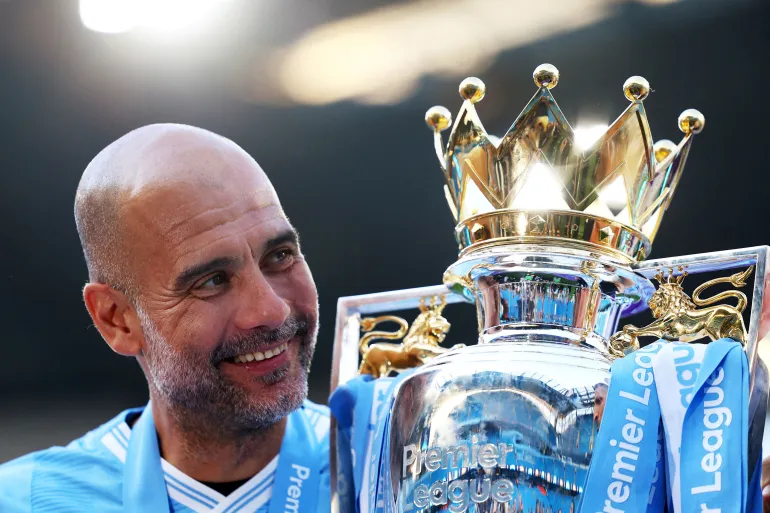
After transforming Manchester City into one of the most dominant teams in football history, Pep Guardiola is leaving behind a remarkable legacy in English football. During his decade-long stay at Manchester City, Guardiola changed tactical standards, broke countless records, and built one of the strongest domestic dynasties the Premier League has ever seen.
But how does Guardiola’s success compare with legendary managers such as Alex Ferguson, Bob Paisley, Brian Clough, and Arsene Wenger? Looking at trophies, league dominance, European success, and long-term influence offers a fascinating comparison.
Guardiola’s Dominance in the Premier League
Guardiola always prioritized league consistency above all else, and his record in the Premier League reflects that philosophy. In 10 seasons with Manchester City, he guided the club to six league titles, including an unprecedented run of four consecutive championships between 2021 and 2024.
Winning six league titles in a decade means Guardiola claimed the Premier League in 60 percent of his seasons in England. Even more impressive, City finished outside the top two only twice during his entire tenure.
Among the greatest managers in English football history, only Bob Paisley recorded a better title-winning percentage. During his nine years managing Liverpool FC between 1974 and 1983, Paisley won six league titles, giving him a success rate of 66.7 percent.
Alex Ferguson, widely considered the greatest manager in Premier League history, won 13 league titles with Manchester United over 26 full seasons. However, Ferguson inherited a struggling United side that had not won the league for nearly two decades. From his first title-winning season in 1993 until retirement in 2013, Ferguson’s title-winning percentage was slightly higher than Guardiola’s.
Champions League Success Compared
Despite Manchester City’s dominance in England, Guardiola’s record in the UEFA Champions League has often been viewed as less impressive than expected.
Under Guardiola, City won the Champions League once in 2023 and reached another final in 2021, losing to Chelsea. The club also made only one additional semifinal appearance during his reign. Considering the club’s financial resources and overall quality, many expected more European trophies.
However, Guardiola can point to his earlier success at FC Barcelona, where he won two Champions League titles and built one of football’s most celebrated teams.
When comparing European success, Brian Clough and Bob Paisley stand out among British managers. Clough famously guided Nottingham Forest to back-to-back European Cup victories in 1979 and 1980, an achievement still regarded as extraordinary. Paisley won Europe’s top competition three times with Liverpool in just five years.
Ferguson also won two Champions League titles with Manchester United, although some critics argue that United could have achieved even more in Europe during their dominant years.
Guardiola’s Trophy Collection
During his time at Manchester City, Guardiola won 17 major trophies, making him one of the most successful managers in English football history.
Only Ferguson won more, with 28 trophies during his legendary spell at Manchester United. However, Ferguson managed the club for 16 years longer than Guardiola spent at City.
Bob Paisley collected 14 major trophies with Liverpool, while Arsene Wenger won 10 trophies with Arsenal FC, including a record seven FA Cups. Brian Clough secured nine major honors during his managerial career with Derby County and Nottingham Forest.
Guardiola’s ability to maintain consistent success across multiple competitions places him firmly among football’s managerial elite.
Record-Breaking Points Totals
One of Guardiola’s greatest achievements was redefining standards for consistency in English football.
Manchester City became the first team in English top-flight history to reach 100 points in a single Premier League season during the 2017–18 campaign. The following season, City earned another remarkable total of 98 points.
Between 2018 and 2024, Guardiola’s City crossed the 90-point mark in four different league seasons, highlighting their incredible consistency.
The fierce rivalry with Jurgen Klopp and Liverpool pushed both clubs to historic levels. Liverpool earned 97 points in 2018–19 but still finished second behind City. In 2019–20, Liverpool finally broke City’s dominance with a 99-point title-winning campaign.
Before Guardiola’s era, Jose Mourinho had set the benchmark when his Chelsea side earned 95 points during the 2004–05 season.
Guardiola’s Historic Records
Guardiola’s Manchester City side broke numerous records during his tenure.
Some of the most notable achievements include:
- First English team to win four consecutive top-flight titles
- First Premier League team to reach 100 points
- Most goals scored in a Premier League season with 106
- First English club to win the domestic treble of Premier League, FA Cup, and League Cup in one season
- Winning the continental treble of Premier League, FA Cup, and Champions League in 2023
Guardiola also matched Ferguson by securing a Premier League title with five matches still remaining in the season.
The One Achievement Guardiola Never Matched
Despite all his success, there remains one legendary accomplishment Guardiola never achieved in English football.
Arsene Wenger’s “Invincibles” season with Arsenal in 2003–04 remains unique in Premier League history. Wenger guided Arsenal through an entire league campaign unbeaten, a feat no other modern English champion has managed to replicate.
While Guardiola revolutionized tactics and built one of football’s greatest domestic dynasties, Wenger’s unbeaten season still stands as one of the most iconic achievements in the sport.
In the debate over England’s greatest football managers, Guardiola’s place among the all-time elite is now undeniable.