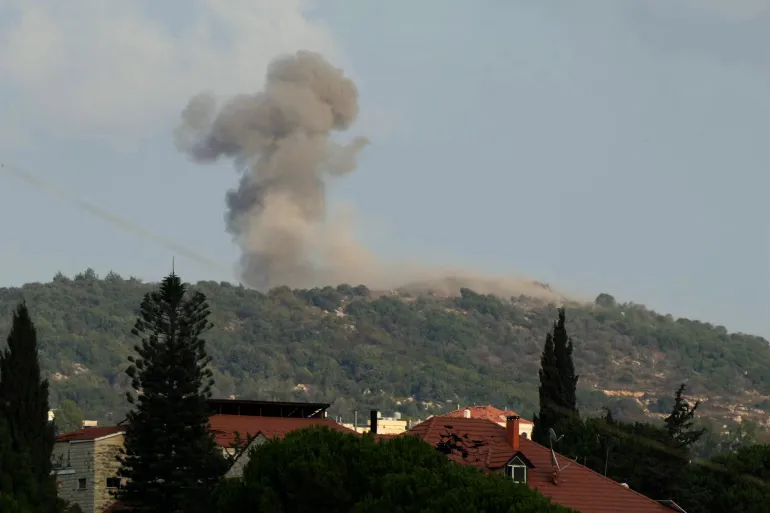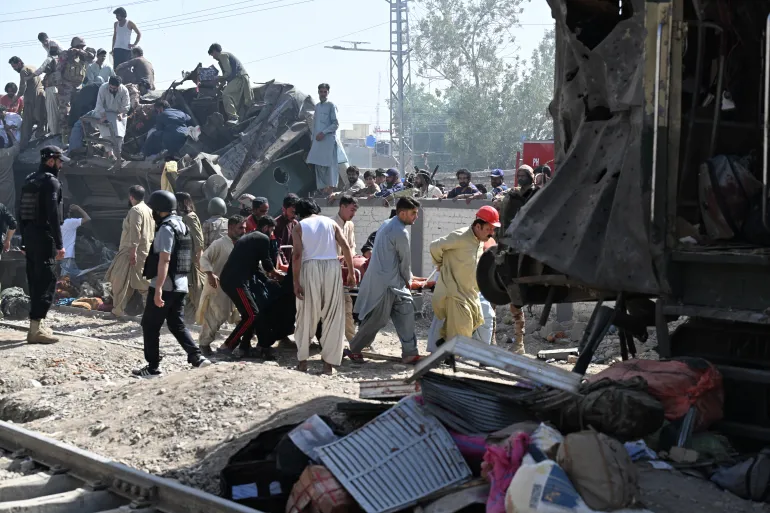
A suicide car bomb attack on a train in Quetta, Pakistan, killed at least 24 people and injured over 50. The BLA claimed responsibility for the deadly blast.
Pakistan Train Bombing in Quetta Kills at Least 24 People
A deadly suicide car bomb attack targeting a train carrying security personnel in Pakistan’s southwestern province of Balochistan has left at least 24 people dead and more than 50 others injured. The devastating explosion took place in Quetta, the provincial capital, causing massive destruction near the railway line and triggering panic across the city.
Officials confirmed that the attack happened when a vehicle packed with explosives rammed into the train as it was passing through a busy section of the city. The powerful blast derailed several train carriages, some of which overturned and caught fire moments after the explosion. Thick black smoke could be seen rising into the sky as emergency teams rushed to the scene.
The separatist militant group Balochistan Liberation Army, commonly known as the BLA, claimed responsibility for the attack shortly after the incident. The group has been involved in multiple violent attacks in Balochistan over the past several years, often targeting Pakistani security forces and infrastructure linked to foreign investment projects.
Witnesses described scenes of chaos and destruction following the explosion. Nearby homes, shops, and buildings suffered serious structural damage due to the intensity of the blast. Rescue workers and local residents worked together to pull injured passengers and civilians from the wreckage while firefighters attempted to control the flames engulfing parts of the train.
Authorities declared a state of emergency at hospitals across Quetta to handle the large number of casualties. Doctors, nurses, and emergency staff were instructed to remain on duty as ambulances continued transporting wounded victims for treatment. Several of the injured were reported to be in critical condition, raising fears that the death toll could increase further.
Security officials said the train was carrying military personnel along with civilian passengers at the time of the attack. Investigators have begun collecting evidence from the blast site to determine how the bombing was planned and executed. Law enforcement agencies also launched search operations in surrounding areas following intelligence warnings of possible additional threats.
Balochistan, Pakistan’s largest province by area, has long struggled with separatist violence and armed insurgency. Militant groups operating in the region accuse the central government of exploiting local resources while failing to provide adequate development and economic opportunities for residents. The Pakistani government has repeatedly rejected these claims and has intensified military operations against armed groups active in the province.
In recent years, attacks in Balochistan have become increasingly deadly and sophisticated. Militants have frequently targeted security personnel, government installations, and foreign nationals, particularly Chinese workers involved in infrastructure projects connected to the multi-billion-dollar China-Pakistan Economic Corridor (CPEC).
The economic corridor links China’s Xinjiang region to the strategic Gwadar Port in Pakistan through a network of highways, railways, and energy projects. While officials describe the initiative as essential for economic growth and regional connectivity, separatist groups have strongly opposed the projects, claiming local communities are not benefiting from them.
Pakistan’s Prime Minister Shehbaz Sharif strongly condemned the bombing and vowed that the country would continue its fight against terrorism. In a public statement, he said such attacks would not weaken the nation’s resolve and promised strict action against those responsible.
Political leaders, security officials, and civil society groups across Pakistan also condemned the violence and expressed condolences to the families of the victims. Social media platforms were flooded with images and videos showing damaged train carriages, burned vehicles, and rescue efforts taking place amid the debris.
The latest Quetta train bombing has once again highlighted the ongoing security challenges facing Pakistan, especially in the restive Balochistan province. Analysts warn that rising militant violence could further destabilize the region and pose new threats to major economic and infrastructure projects.
As investigations continue, security has been tightened at railway stations, transport hubs, and sensitive locations throughout the province. Authorities have urged citizens to remain vigilant while intelligence agencies monitor possible threats linked to militant networks operating in the area.