WHO has raised the Ebola outbreak risk in DR Congo to “very high” after confirmed deaths and hundreds of suspected cases linked to the deadly Bundibugyo strain.
WHO Raises Ebola Public Health Risk to ‘Very High’ in DR Congo
The World Health Organization (WHO) has raised the public health risk level of the Ebola outbreak in the Democratic Republic of the Congo (DRC) to “very high” at the national level as concerns grow over the rapid spread of the deadly virus.
Health officials say the outbreak, centered in the eastern Ituri province, is becoming increasingly difficult to contain. The current outbreak involves the Bundibugyo strain of Ebola, a rare variant for which there is currently no approved vaccine or specific treatment available.
WHO Director-General Tedros Adhanom Ghebreyesus described the situation as “deeply worrisome” and warned that the actual scale of the outbreak may be far larger than official numbers currently show.
According to the latest figures, at least 82 Ebola cases have been officially confirmed, including seven confirmed deaths. However, health authorities believe the true numbers are much higher, with nearly 750 suspected infections and around 177 suspected deaths under investigation.
The WHO announced that additional emergency personnel have been deployed to affected communities in Ituri province to help contain the outbreak and support local healthcare systems struggling to manage the growing crisis.
Ebola is a highly dangerous and often fatal virus that spreads through direct contact with bodily fluids from infected individuals. Symptoms commonly include fever, vomiting, severe body aches, diarrhoea, and internal bleeding in severe cases. Outbreaks can spread quickly in areas with limited healthcare infrastructure and poor sanitation conditions.
Health officials are especially concerned because the Bundibugyo strain has no approved vaccine, making prevention and rapid isolation of patients the primary tools for controlling transmission.
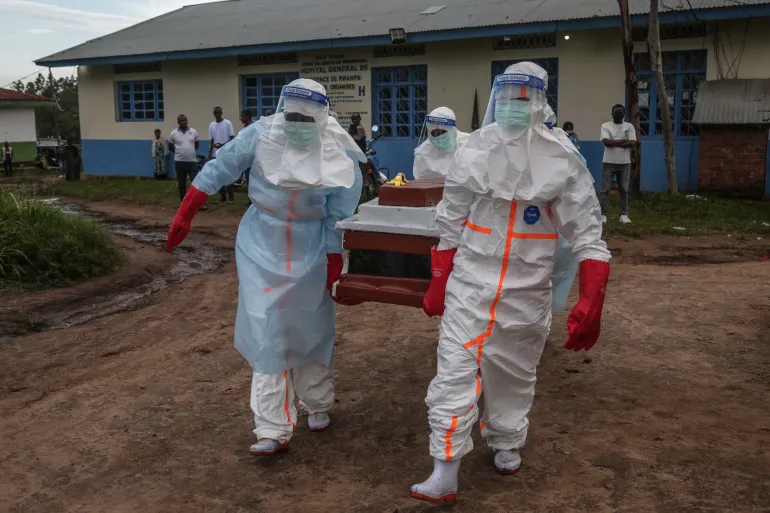
Authorities in the DRC have already begun introducing strict public health measures to slow the spread of the virus. In Ituri province, officials have restricted funerals and ordered that burials must only be carried out by trained medical teams following safety protocols. The transport of dead bodies using non-medical vehicles has also been banned.
Large public gatherings are now limited to a maximum of 50 people, and local sporting activities, including the regional football league, have been suspended to reduce the risk of community transmission.
The growing panic surrounding the outbreak has also triggered unrest in some areas. In the town of Rwampara, residents reportedly attacked and set fire to an Ebola treatment centre after tensions rose over the handling of a victim’s body. Clashes between residents and police highlighted the fear and mistrust still present in many communities affected by Ebola outbreaks.
Humanitarian organizations working in the region say misinformation remains one of the biggest obstacles to controlling the virus. Volunteers have been visiting homes across affected communities to educate people about Ebola symptoms, transmission risks, and the importance of seeking medical treatment early.
Despite these efforts, some residents continue to believe false rumours claiming that Ebola is fabricated or exaggerated. Aid workers warn that misinformation can seriously undermine public health campaigns and increase the danger of further spread.
Global health experts have also warned that the international community should not underestimate the threat posed by the outbreak. WHO officials say the potential for the virus to spread rapidly remains extremely high, particularly because no vaccine exists for this strain.
Regional health authorities noted that while the outbreak has received attention within Africa, it has not attracted the same level of international focus as other recent disease outbreaks affecting wealthier nations. Experts argue that Ebola anywhere in the world should be treated as a global concern due to the speed at which infectious diseases can cross borders.
The WHO also confirmed that an American citizen working in the DRC tested positive for Ebola and was transferred to Germany for treatment. Another American identified as a high-risk contact was moved to the Czech Republic for monitoring and care.
Meanwhile, cases linked to the same Ebola strain have also been reported in neighbouring Uganda. However, WHO officials stated that the situation there currently remains stable after one Ebola-related death connected to a case originating from the DRC.
Health experts continue to stress the importance of international cooperation, rapid medical response, and community awareness to stop the outbreak before it escalates further across Central Africa and beyond.
As fears grow over the worsening Ebola crisis in the Democratic Republic of the Congo, global health organizations are urging governments and humanitarian agencies to provide urgent support to affected regions before the outbreak spirals into a larger international emergency.