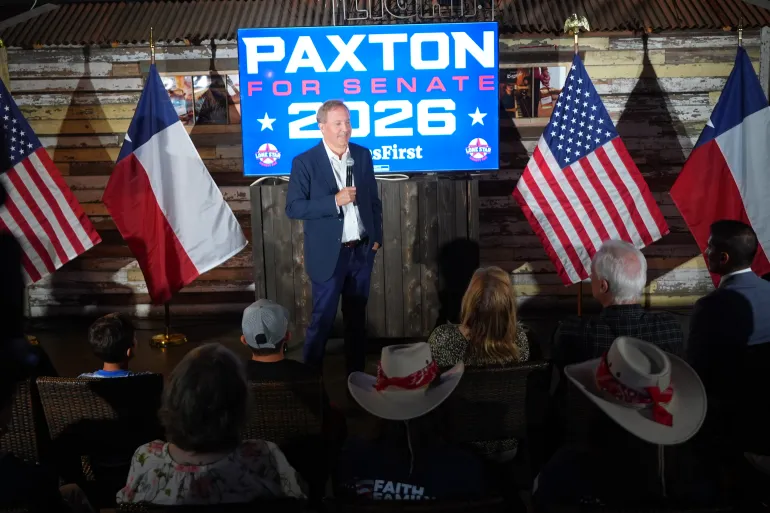
Texas Republicans face a critical Senate runoff as Democrats hope growing voter shifts could help flip the state in 2026.
Texas Senate Runoff Raises Questions About a Democratic Breakthrough
Texas voters are heading into one of the most closely watched political battles of the 2026 election season as Republicans decide who will represent the party in the upcoming US Senate race. The runoff between longtime Attorney General Ken Paxton and incumbent Senator John Cornyn is drawing national attention because many political analysts believe the result could determine whether Democrats have a realistic chance of flipping Texas in November.
For decades, Texas has been considered a strong Republican state. Democrats have not won a statewide office there since 1994. However, demographic changes, shifting suburban voting patterns and growing dissatisfaction among independent voters have made statewide races increasingly competitive over the past several election cycles.
The Republican runoff has become especially important because many strategists believe Paxton could be more vulnerable in a general election than Cornyn. The winner of Tuesday’s contest will face Democratic candidate James Talarico in November’s midterm election.
Paxton entered the race with strong backing from President Donald Trump, who publicly endorsed him and criticised Cornyn for not showing enough loyalty during difficult political moments. Trump’s endorsement boosted Paxton among conservative voters and strengthened his standing within the Republican base.
Throughout his political career, Paxton has focused heavily on immigration enforcement, border security and conservative legal battles against major technology companies. He has also promoted tax cuts and cryptocurrency investment as part of his campaign agenda.
Despite his popularity among hardline conservatives, Paxton remains a controversial figure within Texas politics. Over the years, he has faced multiple allegations and investigations related to securities fraud, ethics issues and personal scandals. While Paxton has denied wrongdoing, many Republicans fear Democrats could use these controversies effectively in general election attack campaigns.
Some Texas Republicans openly worry that Paxton’s nomination could damage the party beyond the Senate race itself. Concerns are growing that a polarising candidate at the top of the ballot could weaken Republican performance in congressional and local elections across the state.
Political observers say the Republican Party’s internal divisions have become increasingly visible during this runoff campaign. Cornyn, although closely aligned with Trump on immigration and conservative policy, has struggled to maintain support among voters who now prioritise loyalty to Trump above traditional Republican leadership experience.
Cornyn has served in the Senate since 2002 and previously held senior positions in Texas government, including attorney general and state Supreme Court justice. His supporters argue he represents stability and electability at a time when Republicans are trying to maintain control of the Senate nationally.
The race also carries major national implications. Democrats are attempting to regain influence in Congress, and Texas has unexpectedly become part of that conversation. A Democratic victory in Texas would be historic and could significantly reshape the balance of power in Washington.
Much of the Democratic optimism centres around James Talarico, a younger progressive candidate who has gained attention for his energetic campaigning style and focus on economic issues. Talarico has built support among younger voters, suburban moderates and independents frustrated with political division.
His platform includes raising the federal minimum wage, limiting congressional stock trading, imposing term limits for lawmakers and reducing corporate influence in politics. On foreign policy, Talarico has supported human rights initiatives and called for changes to US military aid policies involving Israel.
Talarico has also become known for criticising Christian nationalism while presenting himself as a religious progressive voice capable of appealing to both moderate and left-leaning voters.
Recent polling suggests the Texas Senate race may be far more competitive than many expected. Surveys show Talarico either tied with or narrowly leading both Republican contenders in hypothetical general election matchups. While polling in Texas can vary widely, the results indicate growing voter dissatisfaction and a potentially shifting political landscape.
Several factors appear to be contributing to Democratic momentum. Rising living costs, economic concerns and national political tensions have affected voter attitudes across the country. Independent voters, who traditionally lean Republican in Texas, may play a critical role in deciding the outcome.
Analysts believe suburban voters and younger residents moving into major metropolitan areas could also influence the race significantly. Texas cities such as Houston, Dallas, Austin and San Antonio have become increasingly competitive in recent elections, helping Democrats narrow statewide margins.
Although Republicans still maintain structural advantages in Texas, the gap has steadily tightened over the years. In 2018, Democrats came closer than they had in decades to winning a Senate seat, and many strategists believe current political conditions could create another highly competitive race.
The upcoming Republican runoff may therefore do more than decide a nominee. It could shape the future direction of Texas politics and determine whether Democrats can finally break the Republican hold on statewide elections after more than three decades.