France bans Israeli minister Itamar Ben-Gvir as Western nations increase sanctions and restrictions on Israeli leaders.
France Bans Itamar Ben-Gvir as International Pressure on Israeli Leaders Grows
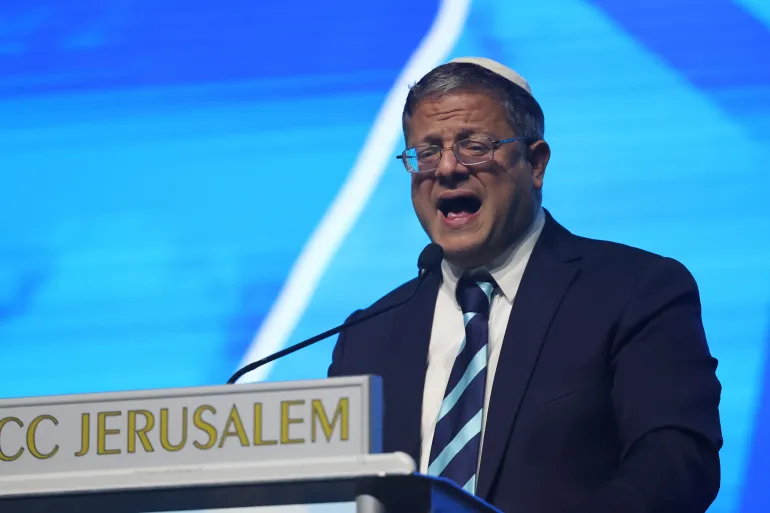
France has officially banned Israeli National Security Minister Itamar Ben-Gvir from entering the country following widespread criticism of his behaviour toward detained activists linked to a Gaza aid flotilla. The move marks another major diplomatic action against senior Israeli officials as international pressure over the Gaza conflict continues to intensify.
French Foreign Minister Jean-Noel Barrot announced the decision after footage circulated online showing Ben-Gvir mocking detained activists who had been arrested by Israeli authorities after participating in the Global Sumud Flotilla mission.
The video reportedly showed activists kneeling on the ground while blindfolded and restrained. French authorities described the actions as unacceptable treatment of European citizens and argued that no public official should intimidate or humiliate detainees.
France also called on the European Union to consider broader sanctions against Ben-Gvir, signalling growing frustration within Europe over the conduct of some Israeli political figures during the ongoing Gaza conflict.
Shortly before the French announcement, Poland imposed a five-year ban on Ben-Gvir, stating that democratic societies must uphold humane treatment for people in custody. The coordinated actions by European countries highlight increasing diplomatic isolation for certain members of Israel’s far-right government.
Ben-Gvir has long been one of Israel’s most controversial political figures. He has previously been convicted in Israeli courts for incitement to racism and has faced criticism for openly admiring extremist figures connected to anti-Palestinian violence.
The recent sanctions against Ben-Gvir come amid broader international scrutiny of Israeli leaders and settler organisations since the start of the Gaza war in October 2023.
One of the most significant legal developments occurred in November 2024, when the International Criminal Court issued arrest warrants for Israeli Prime Minister Benjamin Netanyahu and former Defence Minister Yoav Gallant.
The court stated there were reasonable grounds to believe both leaders were responsible for actions that deprived civilians in Gaza of essential supplies such as food, water, fuel and medicine during military operations.
Under ICC procedures, member countries are obligated to arrest individuals facing warrants if they enter their territory. The decision dramatically increased international legal pressure on Israel’s leadership and sparked major political debate worldwide.
Gallant drew particular criticism early in the Gaza conflict after announcing a complete siege on the territory while using inflammatory language regarding Palestinians. Human rights organisations and genocide scholars have since accused Israel of carrying out actions that may violate international humanitarian law.
Another Israeli minister facing international penalties is Bezalel Smotrich, a far-right politician known for supporting settlement expansion in the occupied West Bank.
In 2025, Slovenia banned both Smotrich and Ben-Gvir from entering the country, accusing them of promoting violence and inflammatory rhetoric against Palestinians. Several Western nations, including Britain, Canada, Australia, New Zealand and Norway, also imposed sanctions on the two ministers over allegations of encouraging extremist actions.
Smotrich has repeatedly made controversial remarks regarding Gaza and the occupied Palestinian territories. He has publicly supported annexing parts of the West Bank and defended expanding Israeli settlements, which are considered illegal under international law.
International criticism of Israeli settlements has also intensified sharply. Earlier this year, the European Union approved sanctions targeting several Israeli settlers and pro-settlement organisations accused of involvement in violence against Palestinians.
The EU stated that extremist violence in the occupied territories could no longer go unanswered. European officials argued that settlement expansion and attacks against Palestinian communities were undermining regional stability and violating international law.
The occupied West Bank has experienced rising violence since the Gaza war began. Thousands of Palestinians have reportedly been displaced due to military operations and settler attacks, while fatalities in the territory continue to increase.
The United States also imposed sanctions on multiple Israeli settlers and organisations during the administration of former President Joe Biden. Those measures blocked access to US financial systems and assets for sanctioned individuals and groups accused of participating in violent acts.
However, after returning to office in 2025, President Donald Trump reversed many of those sanctions through an executive order, highlighting deep political divisions in Washington over how to handle the Israeli-Palestinian conflict.
The growing number of bans, sanctions and legal actions against Israeli leaders reflects mounting international concern over the humanitarian crisis in Gaza and ongoing tensions in the occupied Palestinian territories.
As diplomatic pressure increases, analysts believe relations between Israel and several Western countries could face further strain, especially if violence in Gaza and the West Bank continues to escalate in the months ahead.