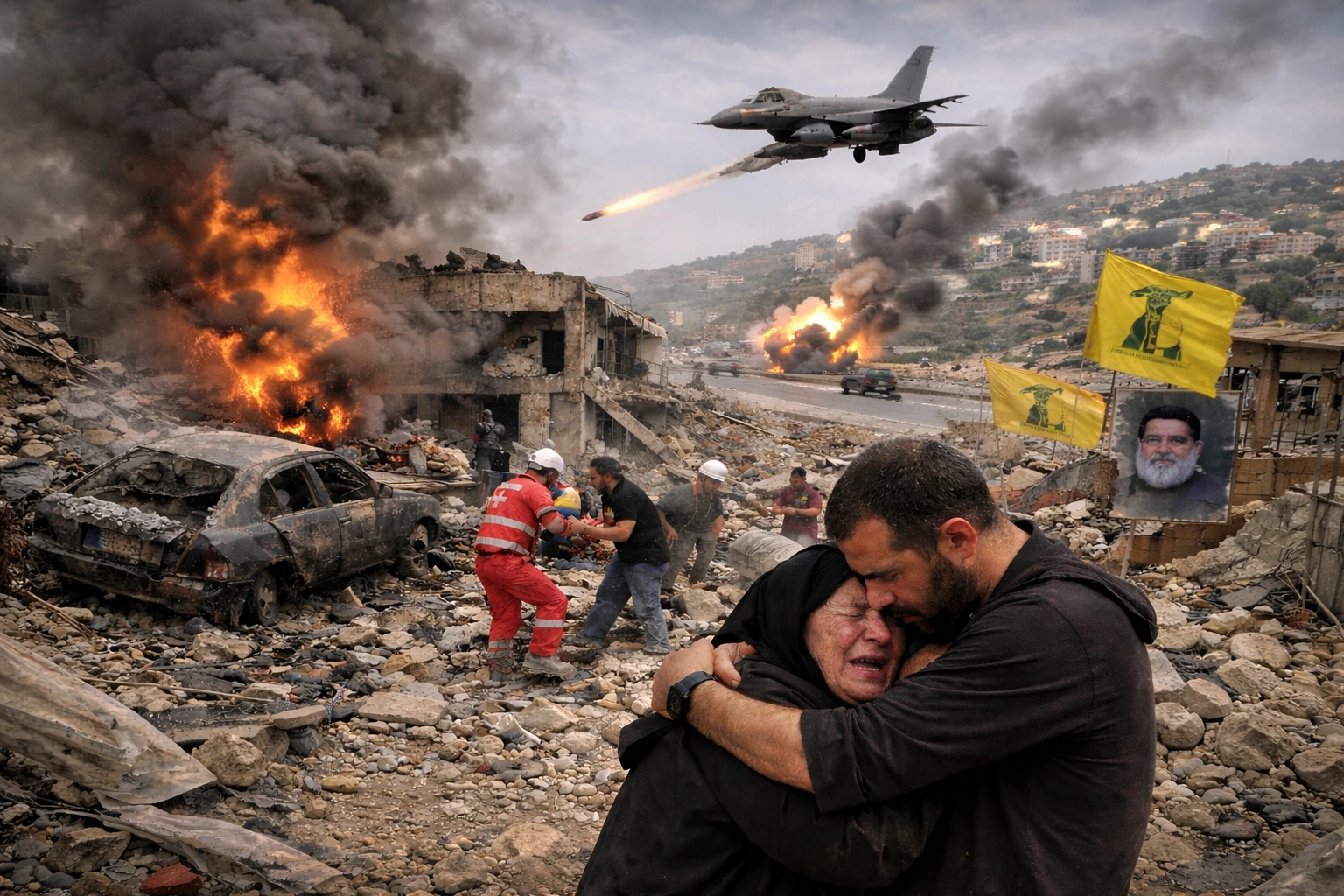
Israel has carried out a new wave of deadly airstrikes across southern Lebanon, continuing its military offensive despite ongoing diplomatic efforts aimed at easing tensions between the two sides.
According to official local reports, Wednesday’s attacks left at least 13 people dead. One of the most devastating strikes hit a family home in the town of Jbaa, killing four members of the same family. Additional casualties were reported in Ansariyeh, where five people lost their lives, and in Qadmus, where four more were killed.
The violence was not limited to southern towns. Airstrikes also targeted areas south of Beirut, including the coastal town of Saadiyat and a nearby highway in Jiyeh, roughly 20 kilometers from the capital. Two vehicles were struck in these attacks, adding to the growing number of casualties and damage.
Residents in affected areas have expressed frustration and anger, particularly toward their government’s recent decision to engage in talks with Israel. Many people say they are exhausted by the constant bombardment and are demanding an immediate end to the violence. Communities in southern Lebanon have faced repeated strikes in recent weeks, leaving civilians questioning why a previously agreed ceasefire has not been enforced.
The recent diplomatic meeting between Lebanese and Israeli representatives in Washington marked a rare moment of direct communication between the two countries. While both sides described the talks as constructive, expectations remain low, especially as key issues like a ceasefire were reportedly not addressed.
Meanwhile, political tensions inside Lebanon are also escalating. A prominent Hezbollah lawmaker criticized the government’s approach, calling negotiations with Israel a mistake. He accused officials of weakening the country’s position and failing to protect its sovereignty, particularly by reducing military presence in vulnerable southern regions.
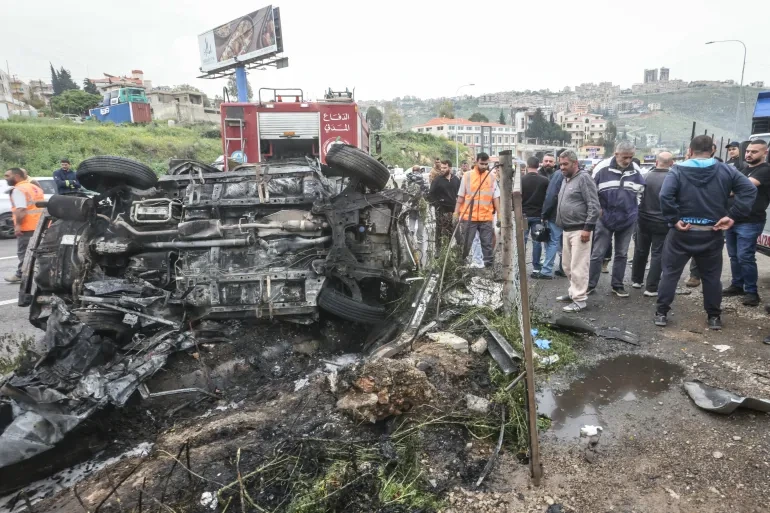
Image Credit: Courtesy of Al Jazeera
The lawmaker also warned that the current leadership is not meeting public expectations and risks deepening internal divisions. He emphasized that Hezbollah is pushing for a comprehensive and lasting ceasefire, rather than a return to sporadic clashes and targeted strikes.
Earlier in the day, Israeli forces issued evacuation warnings to residents in several southern towns, signaling the possibility of further escalation. Multiple locations, including Baraachit, Souaneh, Babliyeh, Seddiqine, and Nabatieh El Faouqa, were reportedly hit during the latest round of attacks. Areas along the Litani River also came under fire.
The outskirts of Bint Jbeil, a town already heavily impacted by recent military operations, were shelled again. In addition, homes in the town of Hanine were reportedly destroyed, further worsening the humanitarian situation.
As the conflict continues, civilians remain caught in the crossfire, with growing calls for an immediate ceasefire and a lasting political solution to end the escalating violence.