The US plans to deploy 5,000 more troops to Poland, raising new questions about NATO strategy, European security, and America’s long-term military role in Europe.
US Deepens European Uncertainty With New Troop Deployment to Poland
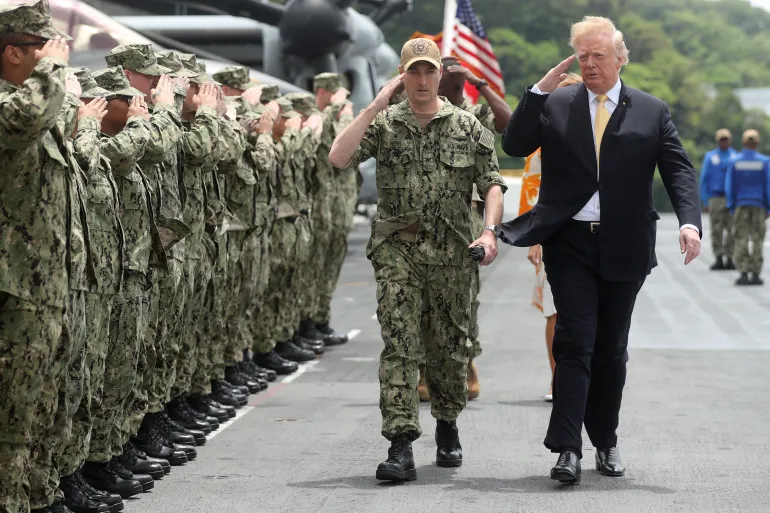
The United States has announced plans to deploy an additional 5,000 troops to Poland, a move that has intensified uncertainty among European NATO allies already struggling to understand Washington’s long-term military strategy in Europe.
US President Donald Trump revealed the decision through social media, linking the deployment to his close relationship with Poland’s newly elected conservative president, Karol Nawrocki. The announcement surprised many European officials because it came shortly after reports that a planned US troop deployment to Poland had been canceled.
The sudden shift in policy has raised fresh concerns about the consistency of America’s approach toward NATO and European defense cooperation. European leaders are now questioning which military priorities they should focus on as they attempt to strengthen regional security amid ongoing tensions with Russia.
In his statement, Trump praised Nawrocki’s election victory and confirmed that the United States would increase its military presence in Poland by sending 5,000 additional troops. The Polish president quickly welcomed the decision, describing it as a sign of strong cooperation and shared commitment to security between Warsaw and Washington.
Polish Foreign Minister Radek Sikorski also supported the move, saying the deployment would help maintain the existing level of American military presence in the country. Poland has become one of NATO’s most strategically important members because of its location near Ukraine and its border with Russia’s Kaliningrad region.
However, the announcement has confused many NATO allies because it contradicts earlier signals from the Trump administration suggesting that the United States intended to reduce its military involvement in Europe under the “America First” policy.
Only days before the latest announcement, the Pentagon reportedly canceled a separate deployment of 4,000 troops to Poland. Earlier in the month, Trump also announced plans to withdraw thousands of US troops from Germany after disagreements with German Chancellor Friedrich Merz regarding the Middle East conflict and broader foreign policy issues.
Trump has repeatedly criticized European NATO members for not spending enough on defense. In recent months, his criticism has intensified as several European countries refused to support the US-Israeli military campaign involving Iran. The US president has argued that NATO allies rely too heavily on American military power while failing to contribute enough themselves.
These mixed signals have left European governments uncertain about the future of US security commitments on the continent. Officials across Europe are now attempting to prepare for a scenario in which they may need to take greater responsibility for their own defense capabilities.
The war between Russia and Ukraine has made these concerns even more urgent. Poland and several Eastern European nations view the continued presence of American troops as essential for regional security and deterrence against potential Russian aggression.
European diplomats admit privately that the constantly changing messages coming from Washington are difficult to interpret. Some governments are unsure whether they should prioritize increasing troop numbers, expanding military production, improving air defense systems, or investing in independent European defense structures.
Swedish Foreign Minister Maria Malmer Stenergard acknowledged that navigating current US policy has become increasingly challenging for European allies. Her comments came ahead of a NATO foreign ministers’ meeting attended by US Secretary of State Marco Rubio.
According to reports, even some American defense officials appear uncertain about the exact implications of the new deployment announcement. The lack of clarity has fueled speculation about whether the troops sent to Poland are entirely new forces or simply soldiers relocated from Germany or other parts of Europe.
Meanwhile, NATO Secretary-General Mark Rutte welcomed the troop deployment while also emphasizing the need for European countries to become less dependent on the United States for their defense.
Rubio echoed similar concerns during meetings with NATO counterparts, stressing that all alliance members must contribute fairly to collective security. He acknowledged growing frustration within the US administration regarding the responses of some NATO allies to recent conflicts in the Middle East.
At the same time, the Pentagon has confirmed plans to reduce the number of combat brigades stationed in Europe from four to three, adding further uncertainty about America’s broader military intentions on the continent.
European leaders are also increasingly uneasy about Trump’s rhetoric regarding Greenland, an autonomous territory linked to Denmark, another NATO member. Such comments have raised additional doubts about Washington’s commitment to maintaining unity within the alliance.
Security experts believe the latest troop deployment to Poland demonstrates the complicated and often unpredictable nature of current US foreign policy. While the move reassures some Eastern European nations concerned about Russia, it also highlights deeper tensions inside NATO over defense spending, military priorities, and the future balance of power within the alliance.
As Europe continues adapting to evolving geopolitical threats, many governments are now accelerating efforts to strengthen their own military capabilities while preparing for the possibility of a reduced long-term American role in European security.