The Democratic Republic of the Congo faces another deadly Ebola outbreak as weak healthcare systems, poverty, conflict and poor sanitation continue to fuel recurring epidemics.
Why Ebola Keeps Returning to DR Congo: A Human Tragedy Deepened by Poverty and Conflict
The Democratic Republic of the Congo (DRC) is once again battling a deadly Ebola outbreak, leaving grieving families, overwhelmed hospitals, and frightened communities struggling to cope. For many residents in eastern Congo, the return of Ebola is not just a public health emergency — it is a painful reminder of the country’s ongoing healthcare failures, poverty, and instability.
In the mining town of Mongbwalu, families are mourning loved ones lost to the latest outbreak. Among them is 15-year-old Judith, whose father, Sadiki Patrick, still struggles to accept her death. Judith initially showed symptoms similar to malaria and was treated at home because the family could not afford proper medical care. By the time she was taken to hospital, it was already too late.
Patrick described the emotional devastation of losing another child and blamed authorities for not responding quickly enough to stop the spread of the virus. Residents in Mongbwalu say deaths are becoming increasingly common while local healthcare services remain unable to handle the growing crisis.
The latest outbreak marks the seventeenth Ebola epidemic in the DRC in the last five decades. Health experts say the repeated outbreaks reveal deep structural problems that continue to make the country vulnerable to infectious diseases.
Doctors and health workers point to several reasons why Ebola keeps returning to the DRC. Poor sanitation, unsafe food preparation, lack of clean water, weak healthcare infrastructure, and widespread poverty all contribute to the spread of disease. In many rural communities, healthcare facilities are located far away, and patients often cannot access treatment quickly enough.
Medical experts working in previous Ebola outbreaks say that many hospitals in remote areas are understaffed and poorly equipped. Some communities rely on clinics with untrained workers, limited medicines, and almost no emergency resources. As a result, diseases can spread rapidly before patients receive proper care.
Access to healthcare remains one of the country’s biggest challenges. Unlike nations with universal healthcare systems, treatment in many parts of the DRC often depends on a family’s ability to pay. Poor families sometimes attempt to treat illnesses at home, increasing the risk of spreading deadly infections to relatives and neighbours.
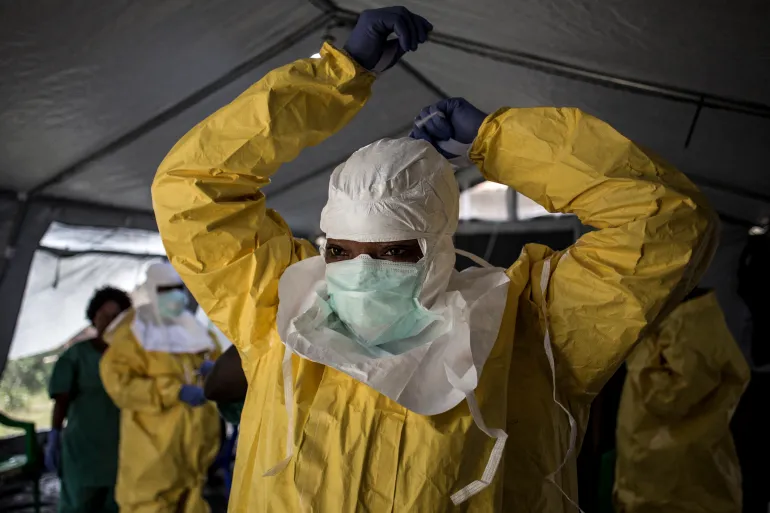
According to recent figures from the Congolese Ministry of Health, more than 500 suspected Ebola cases and over 130 deaths have already been recorded in the current outbreak. Health authorities and international medical teams are now working urgently to contain the disease.
The Africa Centres for Disease Control and Prevention recently sent a team of specialists to the affected region to support response efforts. Experts in epidemiology, data collection, community outreach, and risk communication are helping local authorities strengthen disease surveillance and public awareness campaigns.
Environmental factors also play a major role in recurring epidemics. The DRC contains the world’s second-largest tropical rainforest, home to many animals that can carry dangerous viruses. Health experts warn that deforestation, mining activities, agricultural expansion, and hunting increase contact between humans and wildlife such as bats, rodents, and primates, making disease transmission more likely.
At the same time, conflict and insecurity in eastern Congo continue to weaken healthcare systems. Armed violence has displaced hundreds of thousands of people and disrupted medical services in several regions. Humanitarian organisations say insecurity often prevents aid workers from reaching vulnerable communities quickly.
In conflict zones, healthcare becomes even more difficult to access. Hospitals may shut down, medical staff may flee dangerous areas, and communities may avoid travelling due to fear of violence. Experts say these conditions create the perfect environment for deadly diseases like Ebola to spread unchecked.
Healthcare specialists also believe the DRC needs stronger preventive strategies instead of only reacting after outbreaks occur. Public health education, vaccination campaigns, and early disease detection systems are considered essential to reducing future epidemics.
Many experts argue that awareness campaigns should focus on hygiene, food safety, and recognizing Ebola symptoms early. Improved communication between healthcare workers and local communities could also help reduce misinformation and fear surrounding the disease.
Despite the growing crisis, health officials remain hopeful that the outbreak can eventually be controlled. Congolese virologist Jean-Jacques Muyembe, one of the scientists who helped discover Ebola in 1976, acknowledged weaknesses in the surveillance system but expressed confidence that authorities have the experience needed to contain the virus.
For families like Patrick’s, however, the pain is deeply personal. The loss of a child leaves a permanent emptiness that statistics cannot fully capture. As communities across eastern Congo continue to mourn, the latest Ebola outbreak serves as another tragic reminder of how poverty, conflict, and fragile healthcare systems can turn preventable diseases into recurring national disasters.