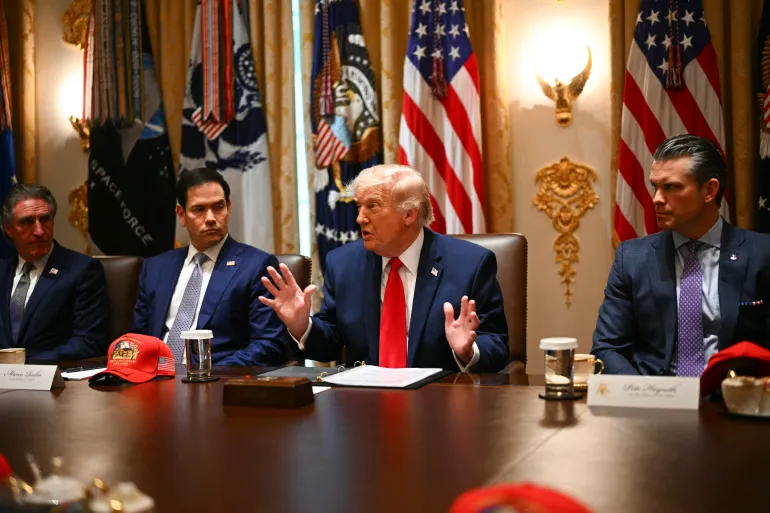
Trump reviews possible Iran deal as tensions remain high over nuclear issues, ceasefire talks, and reopening the Strait of Hormuz.
Trump Reviews Possible Iran Deal as Tensions Persist
United States President Donald Trump says a final decision is being considered regarding a possible agreement with Iran that could extend the current ceasefire and reopen the strategically important Strait of Hormuz.
The announcement comes at a time of continued mistrust between Washington and Tehran despite ongoing negotiations aimed at reducing tensions after months of conflict. While discussions appear to be progressing, Iranian officials insist that no final agreement has yet been reached.
The potential deal is viewed as highly significant for global energy markets, regional stability, and international shipping routes, especially because the Strait of Hormuz remains one of the world’s most important oil transit corridors.
Trump Lists Conditions for Agreement
In a social media statement, Trump outlined several conditions that Iran would need to accept as part of any future understanding between the two countries.
Among the conditions mentioned were a permanent commitment by Iran not to pursue nuclear weapons, unrestricted navigation through the Strait of Hormuz, removal of any remaining naval mines in the waterway, and the destruction of Iran’s enriched uranium stockpiles allegedly hidden underground.
Trump also stated that ships affected during the recent naval blockade could begin returning home as restrictions are eased.
According to his statement, financial arrangements tied to the negotiations remain unresolved, while some smaller issues have reportedly already been agreed upon. Trump added that he was meeting in the White House Situation Room to make a “final determination” regarding the potential agreement.
The comments immediately drew international attention because they suggested negotiations may be approaching a critical stage.
Iran Says No Final Deal Exists
Despite the optimistic tone from Washington, Iranian officials quickly responded by emphasizing that no final agreement has been approved.
Iran’s foreign ministry spokesperson stated that discussions with the United States were still ongoing and that Tehran would not accept demands framed as ultimatums. Officials stressed that Iran makes decisions based on national interests and sovereignty rather than outside pressure.
Iran also rejected descriptions of the US naval blockade as legitimate, arguing that the actions violated international maritime rules and disrupted freedom of navigation in the region.
Tehran further stated that any easing of naval restrictions would simply mean the United States was ending actions that Iran considers illegal from the start.
The response highlighted the deep political and diplomatic divide that continues to shape relations between the two countries even as negotiations continue behind closed doors.
Iranian Officials Demand Action, Not Promises
Senior Iranian negotiator Mohammad Bagher Ghalibaf said Tehran remains cautious about any agreement with Washington.
According to Ghalibaf, Iran no longer trusts guarantees or verbal promises from the United States and will judge future agreements entirely based on actions. He also warned that Iran would not take steps before the opposing side demonstrates practical commitments.
The comments reflected longstanding tensions between the two governments following decades of sanctions, diplomatic disputes, and military confrontations.
Iranian officials continue to argue that previous agreements collapsed because of shifting American policies and changing political leadership in Washington.
Strait of Hormuz Remains Key Focus
The Strait of Hormuz remains central to the negotiations because it is one of the most important global shipping routes for oil and gas exports.
Any disruption in the waterway has immediate consequences for international energy prices and global trade. In recent months, military tensions and naval activity in the region have raised concerns among shipping companies and world governments.
Reports from Iranian media suggest that discussions about reopening the Strait of Hormuz may involve new ship monitoring and inspection systems aimed at reducing security risks while keeping the route operational.
However, sources also claimed that there are no provisions in the current draft agreement requiring Iran to destroy its nuclear materials, contradicting some of Trump’s public statements.
Uncertainty Continues Over Final Outcome
Although reports suggest negotiations are in the final stages, uncertainty still surrounds the exact details of any potential memorandum of understanding between the US and Iran.
Analysts say both countries remain deeply skeptical of one another, making even temporary agreements difficult to finalize. Previous diplomatic efforts between Washington and Tehran have often faced setbacks because of disagreements over sanctions, nuclear development, regional influence, and military operations.
Still, the possibility of a ceasefire extension and a reopening of the Strait of Hormuz has raised hopes for reduced tensions across the Middle East.
Global markets and international observers are closely watching developments, as any breakthrough could significantly impact oil prices, regional security, and future diplomatic relations between the United States and Iran.