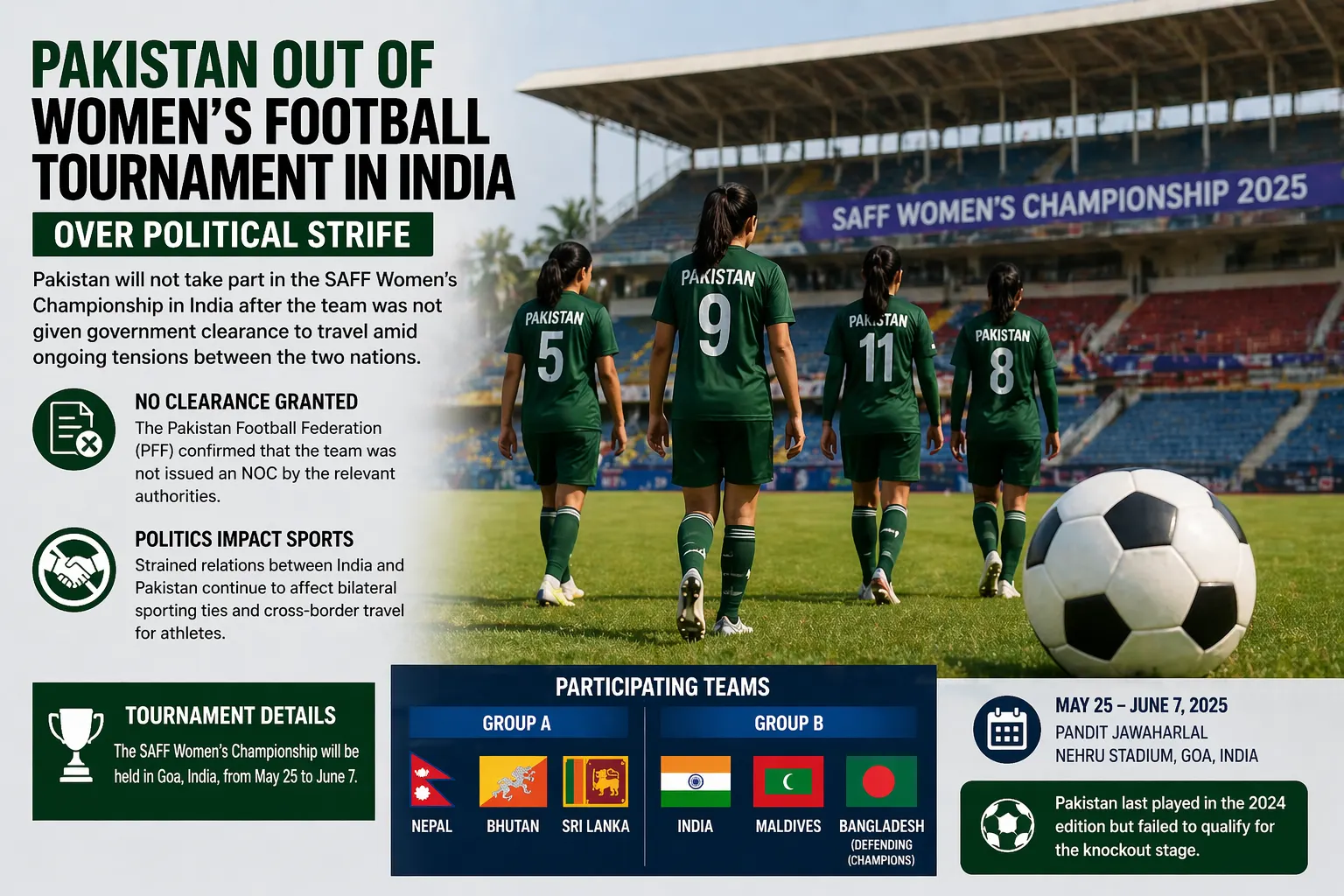
Pakistan’s women’s football team will not participate in the upcoming South Asian tournament in India after failing to receive government clearance to travel. The decision highlights how ongoing political tensions between Pakistan and India continue to impact regional sports.
Travel Clearance Denied for Pakistan Team
Officials from the Pakistan Football Federation confirmed that the team was not granted the required no-objection certificate (NOC), which is mandatory for international travel. As a result, Pakistan will miss the SAFF Women’s Championship scheduled to take place from May 25 to June 7 in Goa.
Tournament Details and Participating Teams
The regional competition will feature six teams divided into two groups:
- Group A: Nepal, Bhutan, Sri Lanka
- Group B: India, Maldives, Bangladesh (defending champions)
Matches will be held at the Pandit Jawaharlal Nehru Stadium, a venue known for hosting major football events.
Political Tensions Affect Sports
The absence of Pakistan reflects long-standing geopolitical tensions between the two nations. Diplomatic strains have often disrupted sports exchanges, leading to:
- Tournament withdrawals
- Match cancellations
- Restrictions on cross-border travel for athletes
Recent policies from both governments have further limited bilateral sporting events, although they occasionally compete in multinational tournaments at neutral venues.
History of Rivalry in Sports
The sporting rivalry between India and Pakistan spans decades and is deeply tied to their political history. Events across football, cricket, and hockey have frequently been affected by security concerns and diplomatic disputes.
In football, Pakistan last competed in the 2024 edition of the SAFF Women’s Championship but failed to advance beyond the group stage. India has previously hosted the tournament and remains one of its strongest teams.
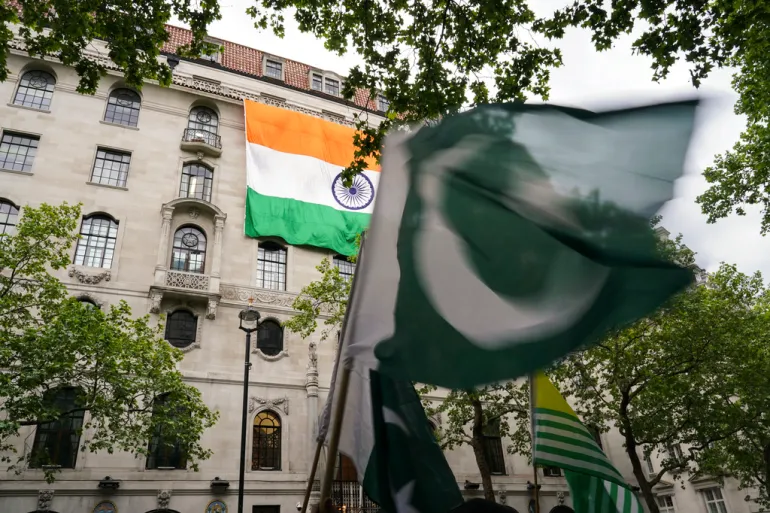
Image Credit: Courtesy of Al Jazeera
Neutral Venue Trend in Other Sports
Cricket has adapted to political tensions through neutral venue arrangements. For example:
- Matches in global tournaments are often relocated to countries like Sri Lanka or the United Arab Emirates
- Major fixtures involving India and Pakistan are played outside either country
However, such arrangements are not consistently applied in football or hockey, leading to withdrawals like this one.
Conclusion
Pakistan’s absence from the SAFF Women’s Championship underscores how politics continues to influence sports in South Asia. Until diplomatic relations improve, regional tournaments are likely to face similar disruptions, affecting athletes and fans alike.