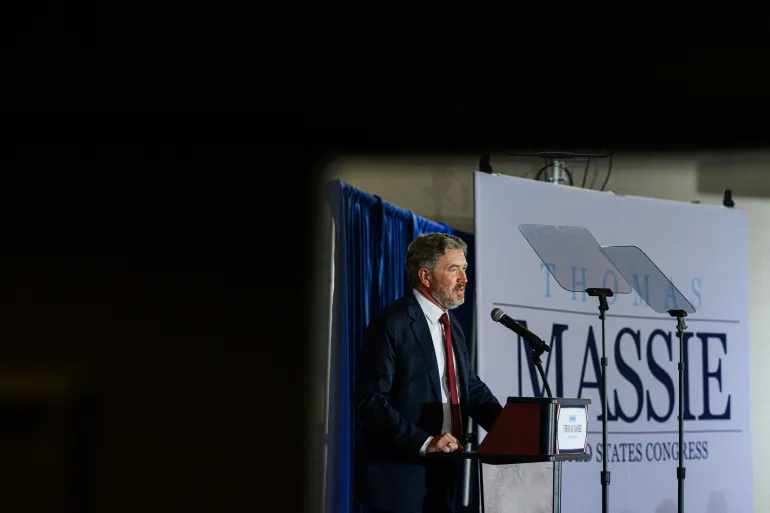
The defeat of Thomas Massie in Kentucky has intensified debate over the influence of pro-Israel lobbying groups, foreign aid, and changing Republican views on US-Israel relations.
Thomas Massie Defeat Fuels Debate Over Israel Lobby Influence in American Politics
The defeat of Republican Congressman Thomas Massie in Kentucky has become one of the most politically significant primary battles in recent American politics. While supporters of pro-Israel lobbying groups celebrated the outcome, the campaign also exposed growing divisions within the Republican Party over foreign aid, US-Israel relations, and the role of powerful political donors in American elections.
Massie lost his Republican primary after facing an intense and expensive campaign backed by influential political networks and high-profile allies of Donald Trump. Trump publicly endorsed Massie’s challenger, turning what would normally have been a local congressional race into a national political showdown.
The campaign attracted extraordinary financial support from pro-Israel donors and lobbying organizations determined to defeat Massie after he questioned military aid to Israel and criticized foreign intervention policies. Massive advertising campaigns flooded Kentucky media markets, portraying Massie as out of step with Republican priorities and national security interests.
Despite the loss, the election sparked a wider conversation among conservatives about political influence, campaign financing, and America’s relationship with Israel. Many Republican voters increasingly question why foreign policy issues — particularly those involving Israel — play such a major role in domestic political battles.
For decades, support for Israel has been one of the strongest bipartisan positions in Washington. Politicians from both major parties often competed to demonstrate loyalty to the US-Israel alliance, while influential lobbying organizations built powerful networks through campaign donations, media access, and political advocacy.
Critics argue that politicians who challenge Israeli policies or question military aid often face political retaliation, donor pressure, and accusations of extremism. The Kentucky race became a major example of how difficult it can be for elected officials to openly dissent from established foreign policy positions.
Massie’s political stance was unusual because it came from within the conservative movement rather than from progressive circles. A libertarian-leaning Republican, Massie has long opposed foreign intervention and large international aid packages. His criticism of aid to Israel reflected his broader opposition to overseas spending rather than hostility toward the country itself.
However, his position became increasingly controversial during the ongoing Gaza conflict, which has deeply divided public opinion in the United States. Images of destruction, civilian suffering, and humanitarian crises in Gaza have shifted perspectives among many Americans, especially younger voters who are more skeptical of unconditional support for foreign military actions.
Political analysts say this changing public opinion is now spreading beyond progressive activists and into parts of the Republican base. Younger conservative voters are increasingly embracing “America First” ideas that prioritize domestic concerns over foreign conflicts and international aid commitments.
Massie’s campaign reportedly drew stronger support from younger Republican voters, while older conservatives remained more supportive of traditional pro-Israel policies. This generational divide may become increasingly important in future Republican elections and foreign policy debates.
The primary battle also intensified discussions about the role of lobbying organizations such as American Israel Public Affairs Committee in shaping US politics. Critics questioned whether foreign-aligned lobbying groups hold too much influence over congressional elections and policy decisions.
Some conservative commentators even called for stricter transparency measures regarding lobbying activities and campaign financing tied to foreign policy interests. Discussions surrounding the Foreign Agents Registration Act gained renewed attention as critics argued that organizations connected to foreign interests should face greater public disclosure requirements.
At the same time, supporters of pro-Israel advocacy groups defended their political involvement, arguing that backing Israel remains a key strategic and moral interest for the United States. They also rejected claims that such support undermines American democracy or national sovereignty.
The race additionally highlighted tensions inside Trump’s political coalition. While Trump strongly supported Massie’s opponent, some nationalist conservatives viewed the campaign as contradictory to the “America First” movement’s focus on reducing foreign entanglements and prioritizing domestic issues.
Many conservative voters now openly question why billions of dollars continue flowing overseas while Americans face inflation, economic pressures, and concerns about border security and infrastructure at home. This growing frustration is reshaping debates over foreign aid and military alliances within the Republican Party.
Although Massie ultimately lost the election, political observers say the broader debate is unlikely to disappear. The Kentucky primary revealed increasing public skepticism toward donor-driven politics and concerns about the influence of powerful lobbying groups on American democracy.
For now, pro-Israel political organizations continue to hold significant power in Washington. However, the controversy surrounding Massie’s defeat suggests that discussions about foreign influence, campaign financing, and America’s role abroad are becoming more mainstream within conservative politics.
The long-term impact of the Kentucky race may extend far beyond one congressional seat. It could mark the beginning of a larger shift in how Republican voters view foreign policy, political influence, and the future of America’s alliances on the global stage.