Learn about Pralhad Joshi, India’s new education minister, his political journey, achievements, and the challenges ahead in reforming education.
Who Is Pralhad Joshi? India’s New Education Minister Faces Major Challenges
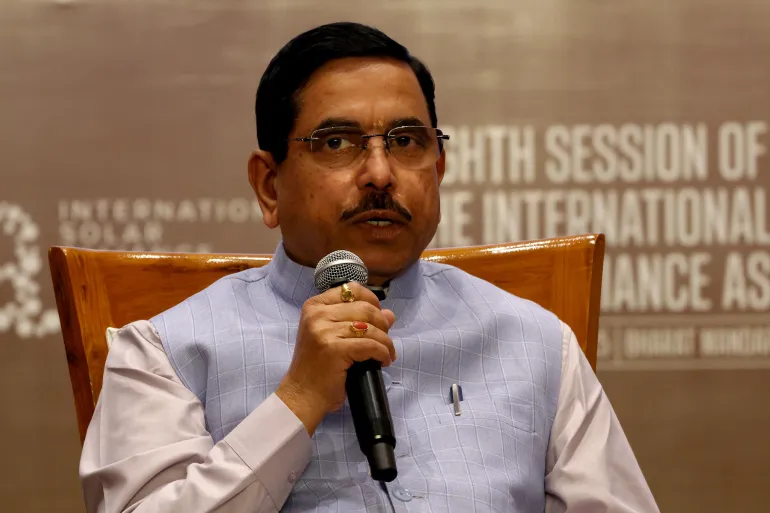
India has appointed Pralhad Joshi as its new Education Minister, marking an important change in the Union Cabinet at a time when the country’s education system is under intense public scrutiny. A senior leader of the Bharatiya Janata Party (BJP) and one of Prime Minister Narendra Modi’s most trusted cabinet colleagues, Joshi takes charge of the education portfolio following the resignation of Dharmendra Pradhan.
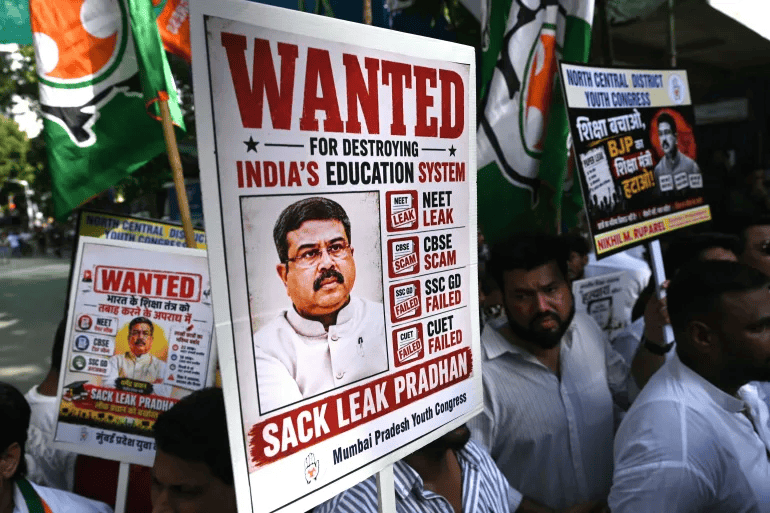
His appointment comes after nationwide protests over alleged irregularities in the National Eligibility cum Entrance Test (NEET), one of India’s most competitive medical entrance examinations. With millions of students and parents demanding transparency and accountability, Joshi now faces one of the most challenging assignments of his political career.
Pralhad Joshi Takes Over as India’s Education Minister
Pralhad Joshi has been serving in the Union Cabinet since 2019 and currently holds the portfolios of New and Renewable Energy and Consumer Affairs, Food and Public Distribution. Alongside these responsibilities, he has now been entrusted with leading the Ministry of Education.
After receiving the appointment, Joshi expressed his gratitude to Prime Minister Narendra Modi through social media, saying he accepted the responsibility with humility and a strong sense of duty. His appointment reflects the government’s confidence in his administrative experience and leadership abilities.
Early Life and Education
Pralhad Joshi was born in 1962 in Bijapur, Karnataka. He completed his Bachelor of Arts degree from KS Arts College in Hubballi, which is affiliated with Karnataka University.
Before entering full-time politics, Joshi co-founded a chemicals business. However, public service and politics attracted him from an early age. During his youth, he became associated with the Rashtriya Swayamsevak Sangh (RSS), a volunteer organization that has played a significant role in shaping many BJP leaders.
His association with the RSS helped lay the foundation for his future political career.
Political Journey of Pralhad Joshi
Joshi officially entered active politics during the early 1990s, when he participated in the Hubballi Idgah Maidan movement in Karnataka. The issue became a major political and religious dispute and significantly raised his profile within the BJP.
In 1998, he was appointed BJP district president for Dharwad. His organizational skills and leadership earned him greater responsibilities over the years.
A major milestone came in 2004, when he was elected as the Member of Parliament from Dharwad. Since then, he has successfully won five consecutive Lok Sabha elections, making him one of Karnataka’s most experienced BJP parliamentarians.
In 2014, Joshi became the BJP’s Karnataka state president, further strengthening his position within the party.
Cabinet Roles and Major Contributions
Pralhad Joshi joined Prime Minister Narendra Modi’s cabinet in 2019 as the Minister of Parliamentary Affairs, Coal and Mines.
During his tenure, he focused on increasing domestic coal production to meet India’s rising energy needs. His policies aimed to reduce dependence on imported coal and strengthen the country’s energy security.
However, his approach also faced criticism from environmental groups and climate activists, who argued that expanding coal production conflicted with India’s climate commitments.
In 2025, Joshi assumed additional responsibilities as Minister of New and Renewable Energy and Consumer Affairs, Food and Public Distribution. Under this role, he has been involved in promoting clean energy initiatives while supporting India’s long-term renewable energy targets, including achieving 500 GW of non-fossil fuel capacity by 2030 and progressing toward the country’s net-zero emissions target by 2070.
Biggest Challenge as Education Minister
Pralhad Joshi’s biggest challenge begins with restoring confidence in India’s education system.
His appointment comes after widespread controversy surrounding the National Eligibility cum Entrance Test (NEET). The examination is the gateway for admission into undergraduate medical colleges across India and is taken by millions of students every year.
This year, approximately 2.3 million students appeared for the examination, competing for fewer than 130,000 medical seats.
Following allegations that the examination paper had been leaked, authorities cancelled the exam and announced a fresh test. The controversy sparked protests by thousands of students, parents, and education activists across the country, demanding fair examinations and accountability.
As the new Education Minister, Joshi is expected to oversee reforms aimed at improving examination security, increasing transparency, strengthening digital monitoring systems, and rebuilding public trust in India’s competitive examination process.
What Lies Ahead?
Pralhad Joshi enters the Ministry of Education with decades of political and administrative experience. However, the education portfolio presents unique challenges that directly affect millions of students and families.
His immediate priorities are expected to include strengthening examination systems, improving governance within educational institutions, ensuring fair admission processes, and addressing concerns raised by students regarding competitive examinations.
Education experts believe his performance will be closely watched, particularly regarding reforms in national entrance exams and higher education policies.
If Joshi successfully restores confidence in India’s education system while maintaining transparency and accountability, his tenure could become one of the most significant phases in the country’s education reforms.
Conclusion
Pralhad Joshi’s appointment as India’s new Education Minister marks an important transition during a sensitive period for the country’s education sector. With extensive cabinet experience and a long political career, he brings administrative expertise to the role. However, his success will largely depend on how effectively he addresses examination reforms, student concerns, and the growing demand for a transparent and reliable education system.