EU unveils a $1 billion Gaza recovery fund to restore essential services, though experts estimate over $71 billion is needed for rebuilding.
EU Launches $1 Billion Gaza Recovery Fund as Rebuilding Challenges Continue
The European Union has announced a new $1 billion recovery and reconstruction initiative aimed at supporting Gaza’s long-term recovery after more than two years of conflict. The funding represents an important international effort to restore essential public services, repair damaged infrastructure, and improve living conditions for millions of Palestinians affected by the ongoing humanitarian crisis.
While the announcement has been welcomed as a positive step, experts note that the amount covers only a small fraction of the financial resources required for Gaza’s full recovery. Recent international assessments estimate that more than $71 billion will be needed over the next decade to rebuild homes, hospitals, schools, roads, water systems, and the local economy.
The newly launched initiative brings together several international partners committed to supporting Gaza’s reconstruction. Participating countries include Spain, France, Germany, Denmark, Italy, the Netherlands, Belgium, Finland, Sweden, Norway, Switzerland, Japan, and the United Kingdom. International financial institutions have also joined the effort, with additional countries expected to participate in the coming months.
Officials said the first funding package totals approximately 900 million euros, or nearly $1 billion, marking the beginning of a broader recovery strategy focused on improving daily life for Gaza’s civilian population.
A major priority of the recovery plan is restoring access to clean water and reliable sanitation services. Large sections of Gaza’s water infrastructure have suffered extensive damage, leaving many communities without safe drinking water. Repairing pipelines, pumping stations, and wastewater treatment facilities is considered essential to protecting public health and preventing the spread of disease.
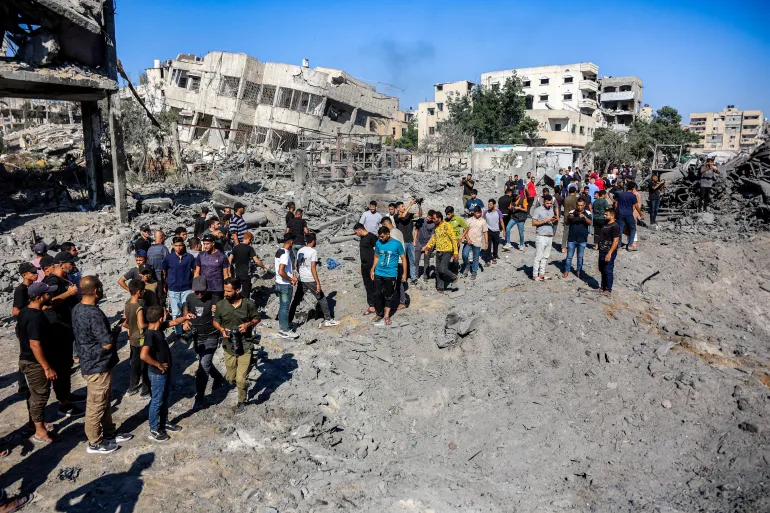
Another important objective is the removal of debris left behind by widespread destruction. Clearing damaged buildings and unsafe structures is expected to create safer living conditions while preparing land for future reconstruction projects. Officials believe that efficient debris removal will also help accelerate rebuilding efforts across affected neighborhoods.
Healthcare is another central focus of the initiative. Many hospitals and medical facilities have been damaged or are operating with limited resources. Funding will help restore healthcare services, repair medical infrastructure, improve access to essential medicines, and strengthen emergency response capabilities.
The recovery program also includes plans to support electricity networks, agriculture, and food production. Reliable energy supplies are vital for hospitals, schools, businesses, and households. Investments in farming and food systems aim to improve food security while helping local communities regain economic stability.
Despite these efforts, humanitarian organizations continue to describe conditions in Gaza as extremely difficult. Many families remain displaced, public services are severely disrupted, and shortages of food, medical supplies, clean water, and fuel continue to affect daily life.
International officials have repeatedly emphasized the importance of ensuring safe and consistent humanitarian access. They argue that rebuilding efforts can only succeed if aid workers, construction materials, medical supplies, and essential equipment are able to reach communities without unnecessary delays.
According to recent recovery assessments, approximately $26.3 billion will be required during the first 18 months alone to restore basic services, repair critical infrastructure, and support Gaza’s economic recovery. These immediate investments are considered essential before larger long-term reconstruction projects can begin.
Experts also stress that rebuilding physical infrastructure is only one part of Gaza’s recovery. Economic development, education, employment opportunities, healthcare, and community services will require sustained international cooperation over many years. Long-term investment will be necessary to create stable living conditions and improve opportunities for future generations.
The newly announced funding represents an initial contribution toward these broader goals rather than a complete solution. International partners have indicated that additional financial support and continued cooperation will be needed to address the scale of destruction and humanitarian needs across Gaza.
As reconstruction planning moves forward, global attention remains focused on securing the conditions necessary for recovery efforts to succeed. Aid organizations continue to call for greater humanitarian access, protection of civilians, and coordinated international support to ensure assistance reaches those most in need.
Although the $1 billion Gaza recovery fund is an important milestone, the overall rebuilding challenge remains immense. With recovery costs estimated to exceed $71 billion over the coming decade, sustained international commitment will play a critical role in restoring infrastructure, strengthening essential services, and helping Gaza rebuild a more stable and resilient future.