Image credit: Created by AI using ChatGPT
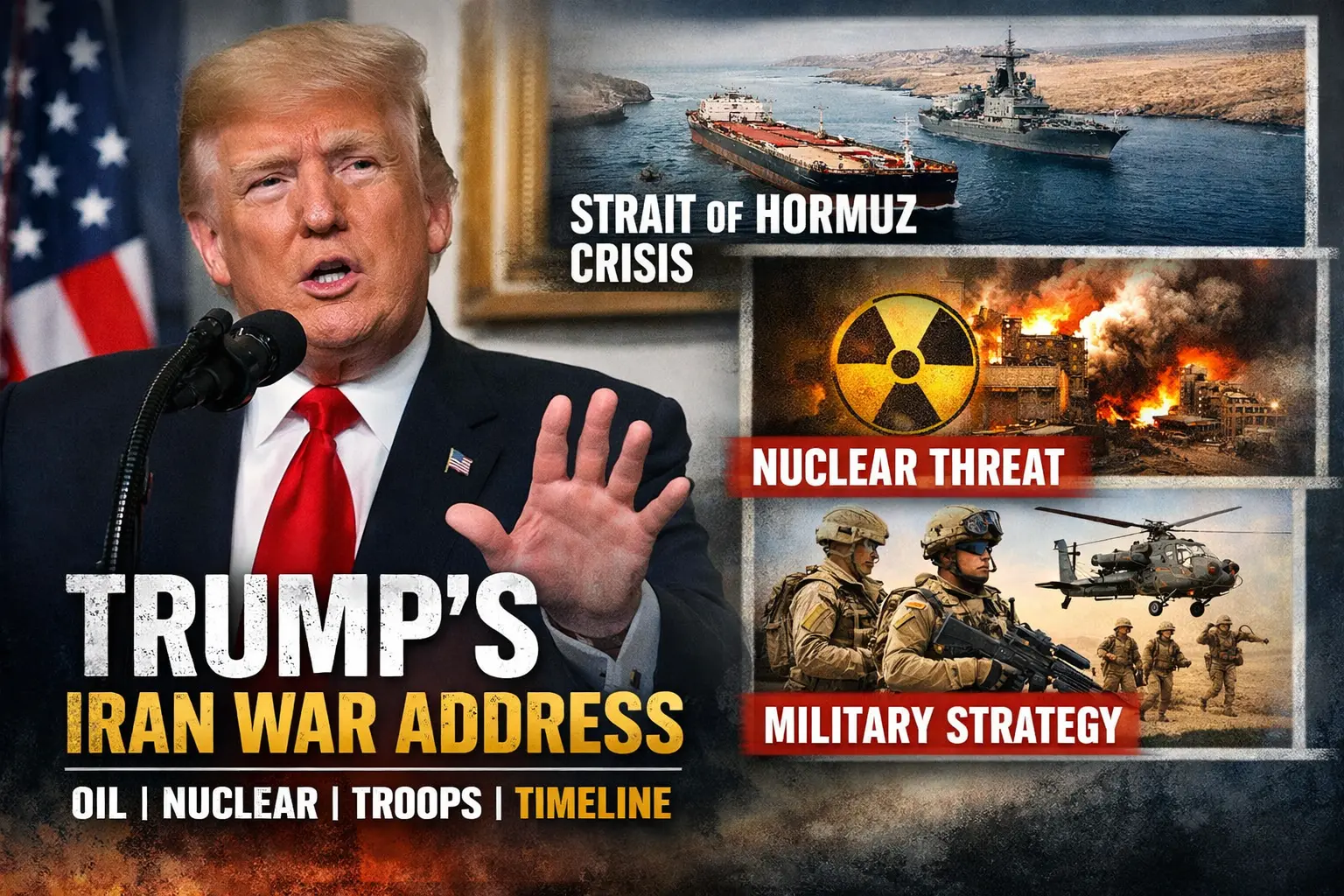
A simplified breakdown of Donald Trump’s latest speech on the Iran conflict, covering the Strait of Hormuz, nuclear concerns, troop plans, and war timeline.
Donald Trump addressed the nation following weeks of limited communication about the ongoing Iran conflict, where he mostly relied on brief interviews and social media updates. His speech focused on several critical issues but offered limited detailed plans.
One of the main concerns discussed was the Strait of Hormuz, a crucial waterway controlled by Iran through which around 20% of the world’s oil supply passes. Rising fuel prices are already impacting global markets due to disruptions in this route. Trump suggested that other nations dependent on this oil should take responsibility for securing the passage. While he mentioned the U.S. could assist, he emphasized that the situation would likely resolve itself once the conflict ends.
On the topic of Iran’s nuclear program, Trump reaffirmed that recent U.S. strikes had severely damaged key nuclear facilities. He claimed these sites were “completely destroyed,” although he acknowledged Iran may attempt to rebuild elsewhere. The U.S. position remains focused on preventing Iran from developing nuclear weapons, despite Iran’s consistent denial of such intentions.
Image credit: Created by AI using ChatGPT
Regarding military involvement, Trump appeared cautious about deploying ground troops. Although U.S. forces are already present in the region, he indicated a preference for surveillance and precision strikes over a full-scale invasion. He stressed that any renewed nuclear activity by Iran would trigger immediate and strong missile responses.
When it comes to the timeline, Trump’s statements were somewhat unclear. He previously suggested the conflict would last four to six weeks, but recent comments indicate operations may continue longer. While he claimed that Iran has been significantly weakened, he also warned that further military action could occur in the coming weeks.
Overall, the speech outlined a strategy focused on maintaining pressure on Iran through targeted strikes and monitoring, rather than committing to a prolonged ground war. At the same time, uncertainty remains around how long the conflict will continue and how global economic factors, especially oil supply, will be affected.