Six months after a ceasefire agreement was signed on October 10, 2025, life in Gaza City and across the Gaza Strip remains unstable. While there are moments of relative calm, these are frequently interrupted by renewed violence, leaving civilians without meaningful improvements in safety or living conditions.
The truce between Israel and Hamas was brokered after a devastating two-year conflict that caused over 72,000 Palestinian deaths and countless injuries. The agreement was meant to mark the beginning of recovery, with key provisions including a full ceasefire, withdrawal of Israeli forces from populated areas, and expanded humanitarian access.
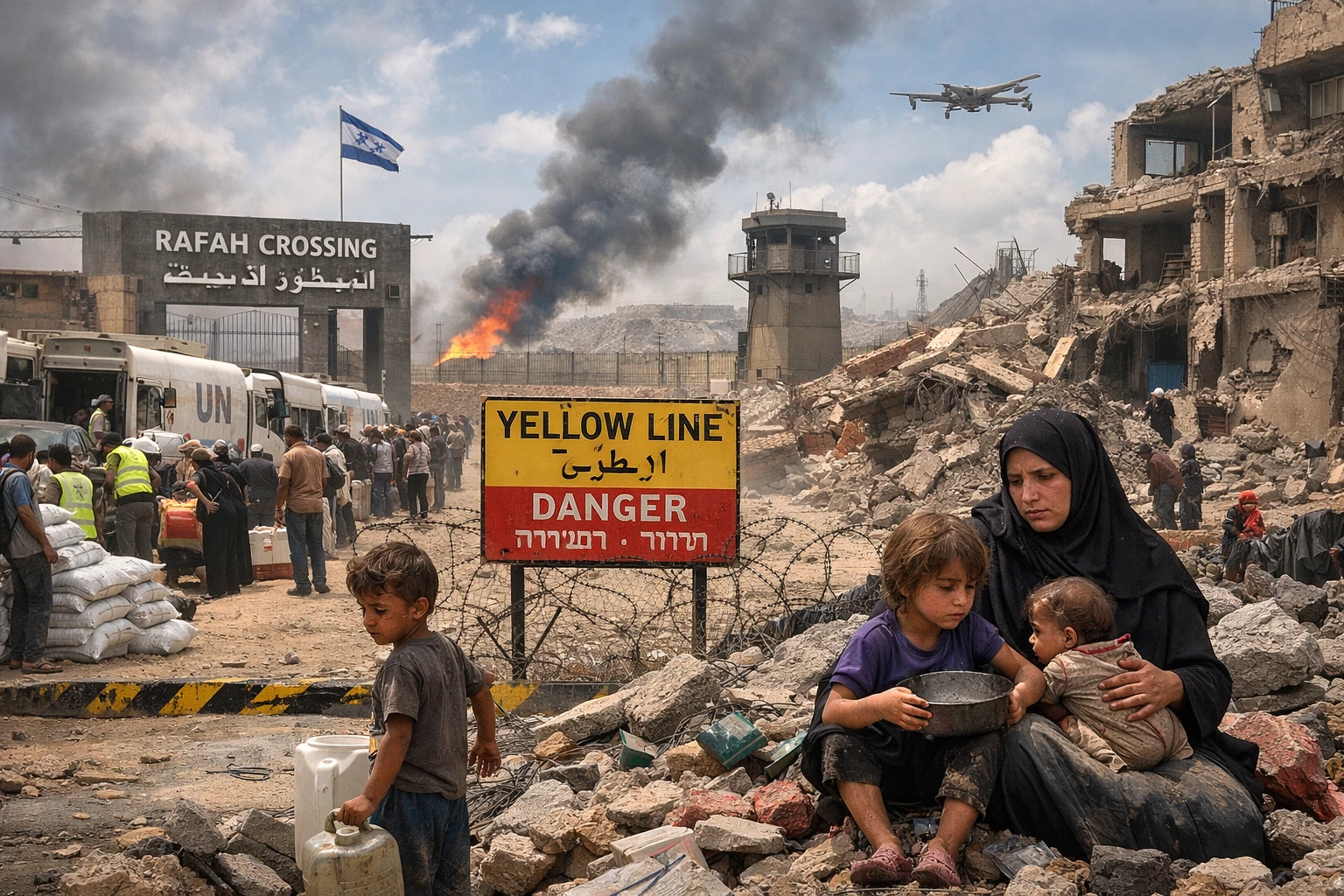
A central part of the deal focused on easing the humanitarian crisis. This included reopening border crossings such as the Rafah crossing, allowing the daily entry of hundreds of aid trucks carrying food, fuel, and medical supplies, and ensuring civilians could move more freely. It also outlined plans for reconstruction under international supervision and the exchange of prisoners. However, six months later, reports indicate that most of these commitments remain largely unmet.
The ceasefire has not been fully implemented. Israeli forces have not completely withdrawn, aid deliveries are inconsistent, and border crossings continue to operate unpredictably. Instead of bringing stability, the agreement has functioned more like a fragile pause, managing the conflict rather than resolving it.
Since the truce began, violations have continued. Thousands of incidents—including air strikes, gunfire, and military incursions—have been reported. In the early weeks alone, hundreds of violations led to significant casualties. Although the intensity of attacks has decreased over time, they have not stopped. By April 2026, more than 700 Palestinians had reportedly been killed since the ceasefire began.
These ongoing incidents highlight the absence of a strong enforcement mechanism. Without effective monitoring or accountability, the ceasefire has failed to prevent violence, instead shifting it into a lower-intensity but persistent pattern.
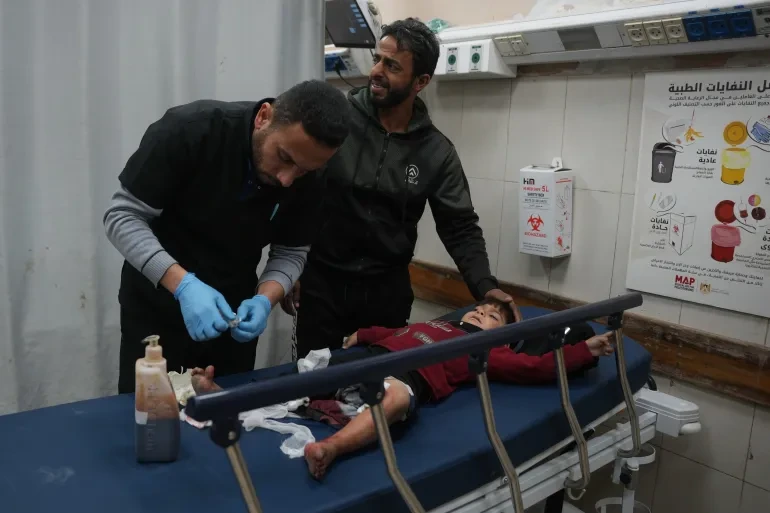
Image Credit: Courtesy of Al Jazeera
Humanitarian conditions remain dire. Although there has been some improvement in aid delivery, it falls far short of what is needed. The agreement initially called for around 600 aid trucks per day, but actual numbers have consistently been lower. This has prevented any meaningful recovery from the severe shortages experienced during the war.
Food insecurity continues to be a major issue. Limited supplies and distribution challenges have kept prices high, making it difficult for many families to afford basic necessities. Malnutrition and hunger remain widespread, with vulnerable populations most affected.
Regional tensions have further complicated the situation. The recent conflict involving the United States, Israel, and Iran disrupted supply chains and temporarily affected border operations. During this period, aid deliveries dropped significantly, with only a fraction of planned shipments reaching Gaza. Movement through crossings was also heavily restricted, deepening the humanitarian crisis.
The Rafah crossing, once seen as a critical lifeline, has become a major bottleneck. Although partially reopened, access remains tightly controlled. Only a small number of patients have been allowed to leave for urgent medical treatment, despite tens of thousands needing care outside Gaza. This gap highlights the ongoing challenges in addressing critical health needs.
Reconstruction efforts have also stalled. Restrictions on materials like cement and steel—often classified as “dual-use”—have delayed rebuilding projects. Even when aid is allowed in, inspections and rerouting slow down the process, reducing its overall impact.
On the ground, Israeli forces still maintain control over large portions of Gaza. A shifting boundary, often referred to as a “Yellow Line,” divides areas of control. This line is not clearly defined, creating confusion and danger for civilians attempting to return to their homes or farmland. Many have been injured or killed near these المناطق due to unclear boundaries and ongoing military activity.
This environment has made daily life extremely risky. Surveillance drones and continued military presence have further restricted movement, especially for farmers and residents trying to rebuild their lives.
Despite international efforts to secure peace, the reality in Gaza today is one of uncertainty. The situation is often described as “neither war nor peace.” While large-scale violence has decreased, there has been no real progress toward long-term stability or recovery.
At the same time, global attention has shifted to other conflicts, reducing media coverage of Gaza. This has left the الأزمة ongoing but less visible, even as millions of people continue to struggle with the последствия of war.
In summary, the ceasefire has not delivered the transformation many had hoped for. Instead of a path to peace, it has become a temporary arrangement that manages the conflict without resolving its root causes.